


Table of Contents
- How to Prevent Blisters When Running: What You’ll Need
- Why Blisters Form: Friction, Moisture, and Heat
- Best Socks to Prevent Blisters Running
- Running Shoes Causing Blisters: Fit and Fixes
- How to Prevent Blisters on Long Runs
- How to Treat a Running Blister
- Common Mistakes to Avoid
- Conclusion: Your Blister-Free Running Checklist
- Frequently Asked Questions
Last Updated: 12 October 2026
How to Prevent Blisters When Running: What You’ll Need
Learning how to prevent blisters when running comes down to three things: dry feet, a stable fit, and socks that move sweat away from your skin. At The Running Bug, we help runners finish virtual challenges from 5k to marathon distance, and the same fixable mistakes come up again and again. Blisters are not a badge of honour. They are a friction problem, and friction problems have solutions.
Here is what you need before your next run:
- Technical running socks (not cotton)
- Shoes fitted with a thumb’s width at the toe
- Anti-chafe balm or foot powder
- Fresh, dry socks for runs over an hour
- Plasters or blister patches in your kit bag
Get these right and most blisters never form in the first place. Below, we break down exactly why they happen and how to stop them.
Why Blisters Form: Friction, Moisture, and Heat
A blister forms when repeated friction rubs the outer layer of skin against the layers beneath it. Moisture makes this worse. Damp skin softens, grips more, and tears faster under movement. Heat adds to the problem by making your feet sweat more.
The science is simple. Your foot slides slightly inside a shoe with every stride. A thousand steps means a thousand tiny rubs. When skin is dry and cool, it copes. When it is wet and warm, the rubbing separates the skin layers and fluid collects underneath. That is a blister.
So the goal is not just cushioning. It is keeping your feet dry, cool, and locked in place.
Best Socks to Prevent Blisters Running
The best socks to prevent blisters running are technical socks made from synthetic fibres or merino wool. They wick sweat away from the skin and reduce friction. Cotton is the enemy here: it holds moisture against your foot and stays damp for miles. Selecting the right fabric is a fundamental step in preventing foot blisters, a principle that remains equally vital when you are hiking.
Look for these features:
- Synthetic blends or merino wool that move sweat away from skin
- Seamless toes to remove the ridge that rubs
- Cushioned heel and toe where friction hits hardest
- A snug fit with no bunching or loose folds
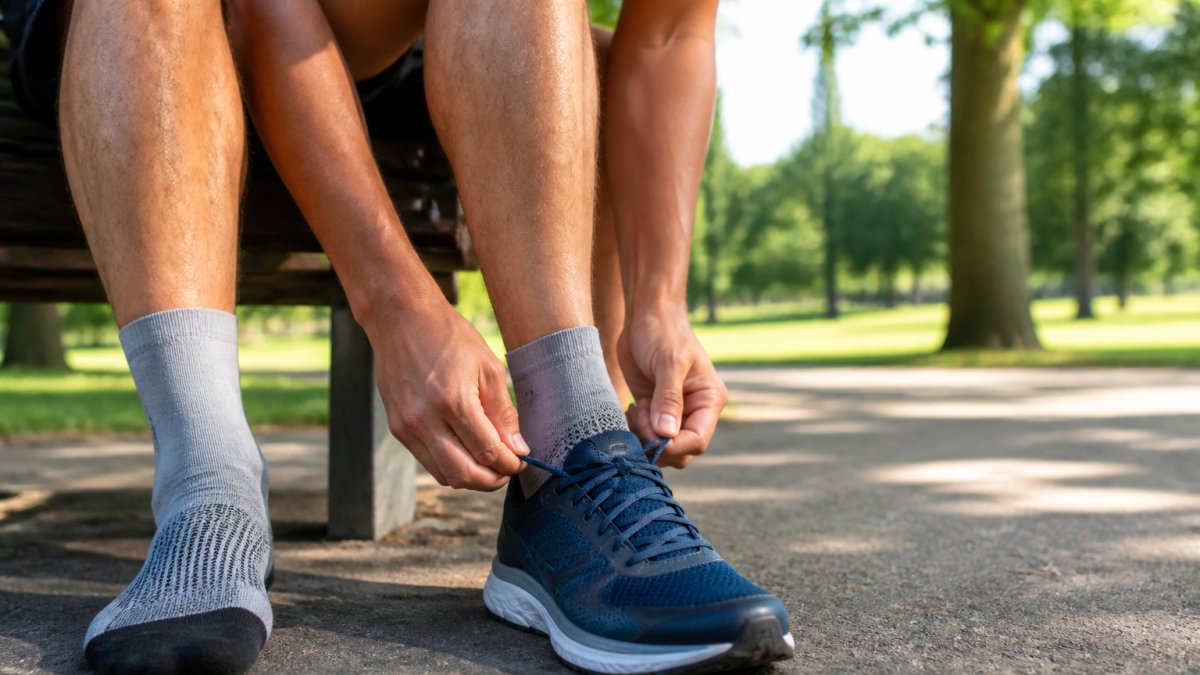
Two pairs can help on very long runs. A thin liner sock under a thicker outer sock lets the layers slide against each other instead of against your skin. It sounds odd, but it works.
Turn your socks inside out before a long run and check the seams. A rough seam at the toe is one of the most common causes of blisters that runners blame on their shoes.
Running Shoes Causing Blisters: Fit and Fixes
Running shoes causing blisters usually come down to fit, not quality. A shoe that is too tight squeezes the toes. One that is too loose lets the foot slide. Both create friction.
Check these points before your next run:
- Toe room: You should fit a thumb’s width between your longest toe and the shoe end.
- Heel lock: Your heel should not lift when you walk. Lace-locking can fix a slipping heel.
- Width: If the sides pinch, you may need a wider fit.
- Wear: Worn-down insoles and stretched uppers change how the shoe holds your foot.
A common mistake is buying shoes a half size too small because they feel “snug”. Your feet swell during a run. That snug shoe becomes a blister machine by mile five. Always try shoes at the end of the day, when your feet are at their largest.
How to Prevent Blisters on Long Runs
Knowing how to prevent blisters on long runs matters most, because time and sweat work against you. The longer you run, the more moisture builds up and the more chances friction has to do damage.
Plan ahead with these steps:
- Start dry. Apply anti-chafe balm or foot powder before you set off.
- Change socks. For runs over an hour, swap to a fresh, dry pair if you can.
- Loosen laces slightly. Feet swell. A little more room helps.
- Stop early. If you feel a hot spot, deal with it straight away.
- Tape known trouble spots. Cover them before they become a problem.
That hot spot is your warning. Stop, dry the area, and cover it. Two minutes now saves you days of sore running later.
NHS guidance on treating blisters
How to Treat a Running Blister
Most running blisters heal on their own if you keep them clean and leave the roof intact. That skin is a natural dressing, so do not pop it unless it is large or painful.
How to treat a running blister:
- Clean the area with warm water and mild soap.
- Cover it with a blister plaster or a soft dressing.
- Do not burst small blisters. The fluid cushions the skin beneath.
- Drain large ones safely with a sterile needle, if needed, then cover.
- Watch for infection. Redness, swelling, or pus means see a pharmacist or GP.
If a blister keeps you off your feet, rest. Running on an open blister turns a small problem into a big one.
Never peel the roof off a blister. That exposed skin is raw and prone to infection, and it will hurt far more than the blister itself. Leave it to heal underneath.
Common Mistakes to Avoid
The same mistakes cause most running blisters. Fix these and you fix the problem.
- Wearing cotton socks. They trap sweat and stay wet.
- Shoes that are too small. Your feet swell, and tight shoes rub.
- Ignoring hot spots. A hot spot becomes a blister fast.
- New shoes on long runs. Break them in on short runs first.
- Loose socks with folds. Bunching creates friction points.
- Wet feet. Change socks when they get damp.
Blisters are a friction problem, not bad luck. Keep your feet dry, your shoes well fitted, and your socks technical, and most blisters simply never form.
Conclusion: Your Blister-Free Running Checklist
Blisters can derail your training, but they are easy to beat once you know the causes. Dry feet, the right socks, and a proper fit do most of the work. Deal with hot spots early and treat any blister with care.
At The Running Bug, we help runners stay motivated with flexible virtual challenges from 5k to marathon distance. You choose when and where you run, submit your evidence, and earn a medal for your effort, all while supporting good causes. It is a simple way to keep going when motivation dips.
Get started with The Running Bug and build a running habit that lasts, blister-free.
Frequently Asked Questions
How do I stop getting blisters when running?
Stop blisters by removing the three causes: friction, moisture, and heat. Wear moisture-wicking socks, ensure your running shoes fit with a thumb’s width at the toe, and use anti-chafe balm on hot spots. Keep toenails trimmed. For long runs, consider double-layer socks or toe caps. If you feel a hot spot, stop and cover it immediately with a blister plaster. These steps prevent most blisters when running.
Why do I get blisters when I run?
Blisters form when your skin rubs against your sock or shoe, especially when moisture softens the skin. Heat from friction causes the skin layers to separate, filling with fluid. Shoes that are too tight, too loose, or worn without socks increase rubbing. Damp socks from sweat or rain make it worse. Addressing fit, fabric, and moisture reduces the chance of blisters.
Are running socks or double-layer socks better for preventing blisters?
Both help, but double-layer socks are specifically designed to reduce friction. The two layers slide against each other instead of against your skin. Technical running socks made from synthetic fibres or merino wool wick moisture away, keeping skin drier. For long distances, double-layer socks are often the best socks to prevent blisters running. Avoid cotton, which holds sweat and increases friction.
How should running shoes fit to prevent blisters?
Running shoes should fit with a thumb’s width (about 1 cm) between your longest toe and the shoe’s end. Your heel should be locked in without slipping. The widest part of your foot should align with the shoe’s widest part. Try shoes later in the day when feet are slightly larger. If running shoes are causing blisters, check for pressure points or a too-narrow toe box.