


Table of Contents
- Why Flexible Running Plans Work for Parents
- Time-Efficient Running Workouts You Can Fit into Your Week
- Running with a Pram: Making It Work
- Short Running Workouts for Busy Schedules: Weekly Structure
- Building Consistency Without Guilt
- Common Mistakes Parents Make with Running Plans
- Staying Motivated When Life Gets in the Way
- Conclusion
- Frequently Asked Questions
Last Updated: September 29, 2026
Why Flexible Running Plans Work for Parents
Being a parent who wants to run is like trying to solve a puzzle with pieces that never stop moving. Your schedule shifts. The kids get sick. Work deadlines pile up. A rigid running plan falls apart by Tuesday.
Flexible running plans for parents solve this problem by working WITH your life, not against it. Instead of demanding you run at 6am every Tuesday, they let you run when you actually can, and still make progress.
The difference is profound. A plan that bends doesn’t break. You skip a session and pick up the next one without guilt or derailment. You run 20 minutes instead of 45 and still get a workout. Over time, this consistency matters far more than perfection.
The secret isn’t motivation, it’s structure that adapts. Parents who succeed aren’t more disciplined. They’re working with a framework that expects life to happen.
Time-Efficient Running Workouts You Can Fit into Your Week
The biggest barrier to running as a parent isn’t willpower. It’s time. You need workouts that deliver results in 20 to 40 minutes, not 90.
Here’s the good news: short runs work. They build fitness, improve speed, and keep you consistent. The key is choosing the RIGHT type of run for the time you have.
The 20-Minute Run
A 20-minute run is your secret weapon on busy days. It’s long enough to count, short enough to fit between school drop-off and work.
The structure matters more than the distance. Here’s what works:
- Warm up (2 minutes): Easy jog to loosen up
- Main effort (15 minutes): Steady pace where you can talk but not sing
- Cool down (3 minutes): Slow jog to finish
This simple format keeps your fitness intact even when life is chaos. You’re not trying to run far, you’re maintaining the habit and your aerobic base.
The Lunchtime Loop
If you work near a park or can run from your workplace, a lunchtime loop is perfect. You get a break, a run, and you’re back before anyone notices.
The beauty is flexibility. Run 25 minutes one day, 30 the next. No pressure to hit a specific distance. The consistency of showing up matters more than the exact mileage.
Pack trainers at work and you’re ready. No excuses about forgetting kit at home.
The Early Morning Dash
Early mornings work for some parents. The house is quiet. The kids are asleep. You can run 30 minutes and be back before breakfast.
It’s not for everyone. If you hate waking up early, don’t force it. But if you’re naturally an early riser, this is your window.
The trick is preparation. Lay out your kit the night before. Go to bed earlier if you can. Make it as easy as possible to step out the door.
Running with a Pram: Making It Work
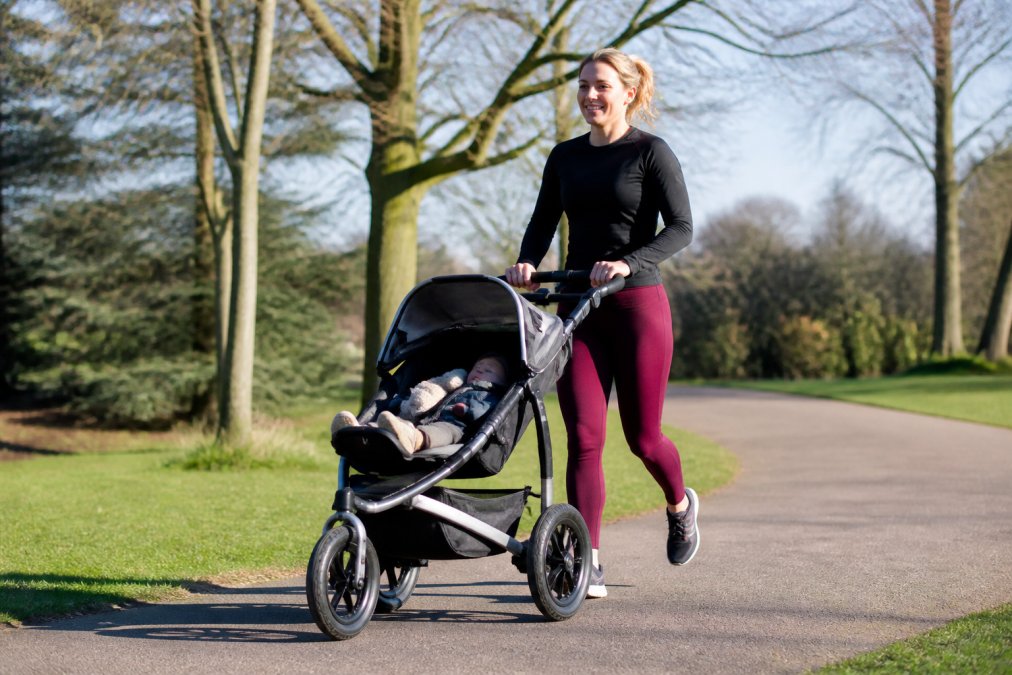
Running with a pram opens up a whole new possibility for parents. You’re not paying for childcare. You’re not waiting for someone else to watch the kids. You just run.
But it’s different from running solo. Your pace changes. Your balance shifts. The pram handles differently in wind or on uneven ground.
Choosing the Right Pram for Running
Not all prams are designed for running. A standard pushchair is too heavy and unstable at speed.
A proper running pram has:
- Lightweight frame, usually under 10kg, much less than regular prams
- Fixed front wheel, doesn’t swivel, which keeps it stable
- Good suspension, absorbs impact so the baby isn’t jolted
- Wrist strap, keeps it secure if you lose grip
- Reflective details, visibility on early morning or evening runs
Budget varies, but running prams are an investment. If you plan to run regularly with your child, it’s worth the cost. A cheap pram will slow you down and feel unsafe.
Test it before you buy if you can. Some shops let you take them out. Feel how it handles at different speeds.
Adjusting Your Pace and Technique
Running with a pram changes everything about your running form.
Your stride shortens. Your arm swing is limited. You’re pushing weight in front of you, which affects your balance. Accept this. You’re not trying to run like you do without the pram.
Pace expectations shift too. If you normally run 10-minute miles, expect 11 or 12 minutes with a pram. That’s normal. You’re still running. You’re still building fitness.
Push the pram with one hand, not both. This keeps your arm swing and prevents your shoulders from tensing up. Switch hands every 5 to 10 minutes to balance the load.
On hills, the pram gets heavier. Lean slightly forward and use your core. Don’t try to power through, pace down and accept the effort.
Running with a pram is slower and feels harder. That’s not failure. That’s realistic training with a child in tow.
Short Running Workouts for Busy Schedules: Weekly Structure
The magic of flexible running plans for parents is that they give you a framework without demanding perfection. Here’s a weekly structure that works even when life gets messy.
| Day | Workout Type | Duration | Effort Level |
|---|---|---|---|
| Monday | Easy recovery run | 20-25 minutes | Conversational pace |
| Wednesday | Speed session | 25-30 minutes | Mix of fast and easy |
| Saturday | Longer weekend run | 35-45 minutes | Steady, comfortable pace |
This isn’t a rigid schedule. If Monday doesn’t work, run Tuesday. If Wednesday gets skipped, pick it up Thursday. The pattern matters more than the exact days.
Monday: Easy Recovery Run
Monday is about bouncing back from the weekend. You’re not trying to go fast.
Run at a pace where you can hold a conversation. If you’re breathing too hard to speak, you’re going too fast. Slow down.
This run keeps your body active without stressing it. It improves blood flow and helps you recover from harder efforts. Many parents skip easy runs because they feel “too easy”, but they’re essential. Reducing the friction of getting out the door is just as vital as the run itself, which is why switching to convenient shoelaces allows you to spend less time preparing and more time moving.
20 to 25 minutes is enough. If you have 15 minutes, do 15. If you have 30, do 30. The range is wide because life is unpredictable.
Wednesday: Speed Session
Wednesday is when you push a bit. This is where fitness improvements happen.
A simple structure works:
- Warm up for 5 minutes at easy pace
- Run 8 to 10 minutes at a faster pace (where talking is hard but not impossible)
- Cool down for 5 minutes easy
That’s 18 to 20 minutes total. It’s short, it’s effective, and it fits into a lunch break or before work.
Speed sessions don’t have to be complicated. You’re not doing interval repeats or tempo runs.
Saturday: Longer Weekend Run
Saturday is your chance to run longer. The weekend usually offers more time.
A common mistake is running the long run too fast. Parents often feel like they should “make the most” of their time and push hard. Resist this. Slow down. The long run builds endurance when you run at an easy pace.
Building Consistency Without Guilt
None of this is true.
Here’s how to build real consistency:
Lower your expectations on hard days. If you have 15 minutes instead of 30, that’s your run. Don’t skip it because it’s “too short.” Something is always better than nothing.
Common Mistakes Parents Make with Running Plans
Parents who struggle with running usually make the same mistakes. Knowing them helps you avoid them.
Mistake 1: Starting too fast
Mistake 3: Treating every run like it’s a race
Mistake 4: Giving up after one missed week
Staying Motivated When Life Gets in the Way
Motivation is overrated. Discipline is better. But even discipline needs a boost sometimes.
The parents who keep running aren’t the most motivated. They’re the ones who built a system that survives real life.
Conclusion
Flexible running plans for parents aren’t a compromise. They’re the smartest way to build a running habit that lasts.
Frequently Asked Questions
How can I stay consistent with running when I have young children?
Build runs into non-negotiable times: early mornings before the household wakes, during school runs, or when a partner can watch the children. Schedule three shorter runs per week rather than chasing one long run you might skip. Accept that some weeks will be tougher than others, missing one run doesn’t mean abandonment. Track your runs visually (even just ticking a calendar) to reinforce the habit. Flexible running plans for parents work because they adapt to your reality, not the reverse.
Can you maintain fitness with short, flexible running sessions?
Yes. Three 20-30 minute runs per week build aerobic fitness and consistency better than sporadic longer efforts. One session should include tempo work or intervals; one should be easy; one can be a longer weekend run when time allows. Time-efficient running workouts deliver results because intensity and frequency matter more than duration alone. Parents often find they perform better on shorter, focused sessions than they would on longer runs they’re too tired to complete.
What’s the best way to run with a pram?
Use a running pram designed for jogging, lighter and more stable than standard pushchairs. Keep your arms relaxed and bent at 90 degrees; grip the pram handle loosely to avoid tension. Expect your pace to be 30-60 seconds per kilometre slower than unencumbered runs. Running with a pram works best on flat, smooth routes; save hills for runs without it. Start with 15-20 minutes and build gradually, as the extra weight and altered biomechanics demand adaptation.
How do I manage running motivation when I’m sleep-deprived?
On low-energy days, commit to 15 minutes instead of cancelling entirely. Often, starting moves you past fatigue. Keep runs easy on tired days, no speed work when sleep is short. Consider virtual running challenges as external motivation; knowing you’re part of a community pursuing goals alongside other parents can shift your mindset. Short running workouts for busy schedules are sustainable precisely because they don’t demand peak energy; you can maintain them through difficult phases.