

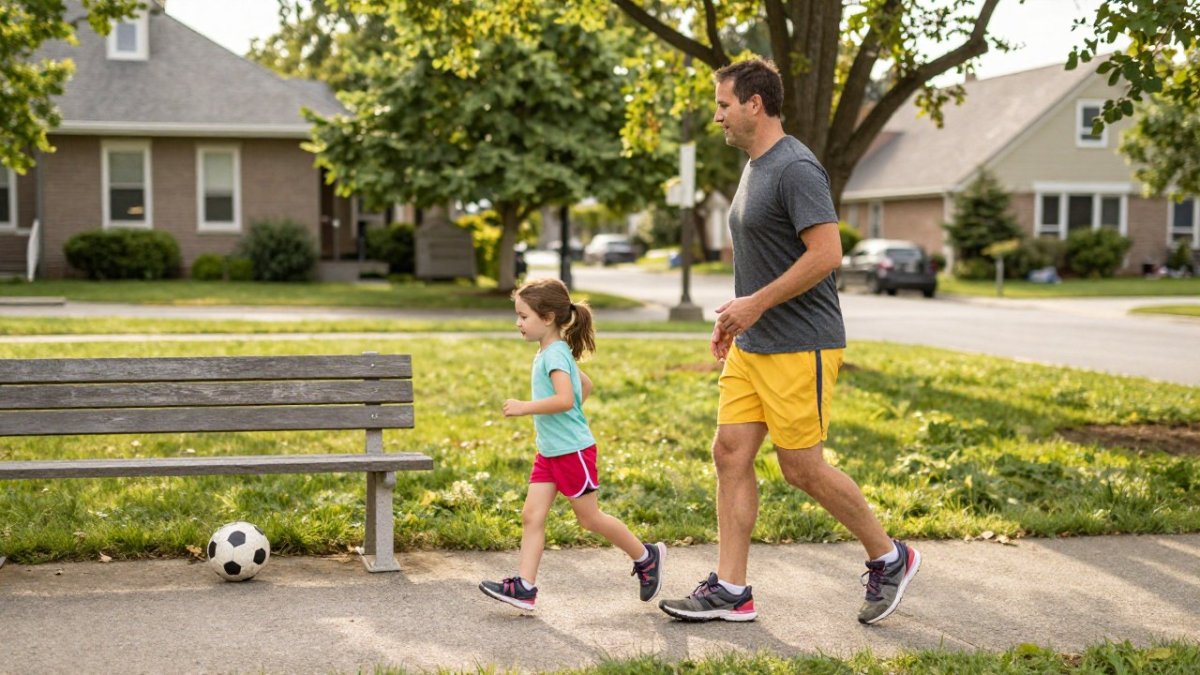
Last Updated: 10 November 2026
Quick Summary
Families can stay active without gym memberships by combining free outdoor activity, short home workouts, flexible virtual challenges and occasional low-cost group classes. A weekly plan built around free time, with a weather-proof backup for every outdoor session, helps the routine stick.
- Walks, parks and playgrounds cost nothing beyond time and suitable clothing.
- Ten-minute home circuits work best when they are short, playful and held at the same time daily.
- Virtual challenges suit irregular schedules because they can be completed at any time and place.
- Community dance, yoga and Tai Chi classes often cost less than private studios; many offer a trial session.
- Add only one new activity at a time, since stacking too many early is a common reason families quit.
Table of Contents
- Why Families Look Beyond Gym Memberships
- Free Family Fitness Activities Outdoors
- Home Workout Ideas for Parents and Children
- Virtual Fitness Challenges for Families
- Low-Cost Group Classes, Dance and Tai Chi
- Comparing Costs, Commitment and Age Suitability
- Building a Weekly Family Activity Plan
- Frequently Asked Questions
Why Families Look Beyond Gym Memberships
Many families find that gym memberships are hard to justify when children, school runs and work schedules all compete for time. The practical question that comes up again and again is how to keep everyone moving without paying for a monthly contract.
The answer is usually a mix of free, low-cost and home-based options. Families that build a routine around these tend to stick with it longer than those who rely on one expensive commitment, such as costly gym memberships. The sections below cover seven ways to do that, along with a simple weekly plan to pull them together.
Free Family Fitness Activities Outdoors
Outdoor activity is the easiest starting point because it costs nothing beyond time and suitable clothing. Walking, cycling and running in local green spaces all count as physical activity, and each one can be adjusted to suit young children and older adults alike.
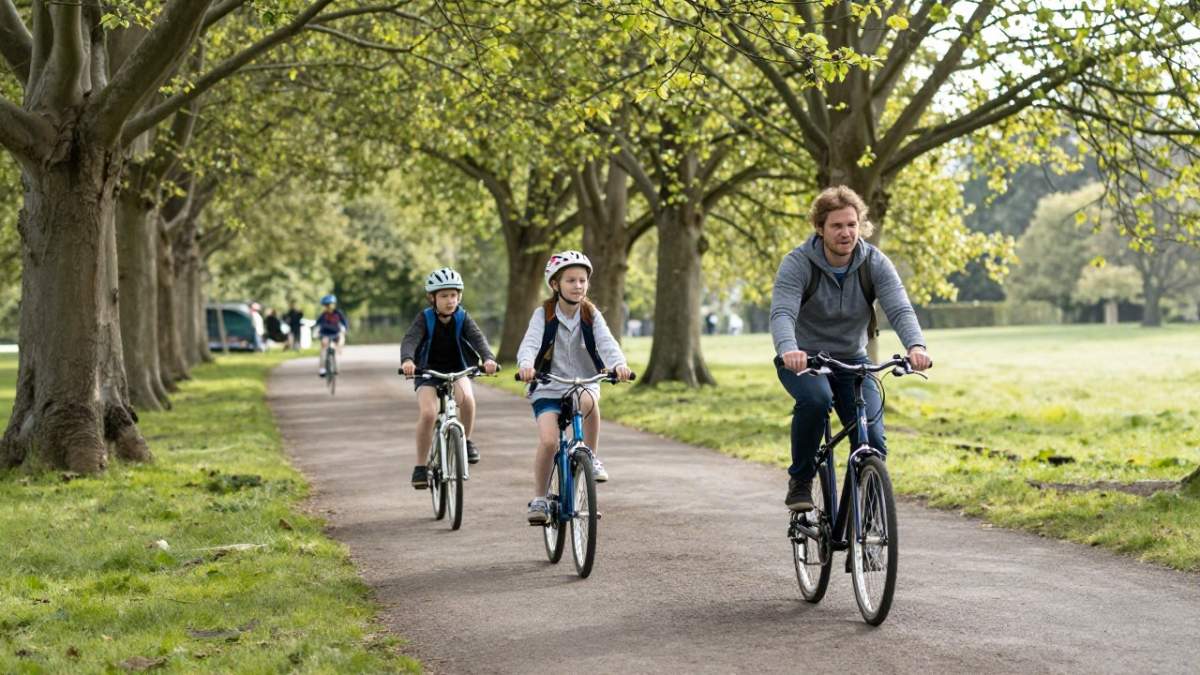
Walks, Cycling and Green Spaces
A brisk family walk after dinner is one of the simplest habits to keep. Cycling works well for older children, while toddlers can ride in a trailer or on a balance bike beside you.
- Pick a route you can repeat, so the habit becomes automatic
- Set a loose goal, such as reaching a particular park bench or playground
- Carry water and a small snack for longer outings
Parks, Playgrounds and Local Clubs
Local parks often have play equipment, open lawns and outdoor fitness stations at no charge. Many areas also run free or low-cost junior sports sessions, which are worth checking through your council or local leisure services.
Home Workout Ideas for Parents and Children
Home sessions work best when they are short, playful and done at the same time each day. Keep equipment simple: a yoga mat, a skipping rope and a pair of hand weights cover most needs.
- Ten-minute circuits of squats, step-ups and star jumps for the whole family
- Dance-along sessions to upbeat music, which children often ask to repeat
- Balance challenges, such as standing on one leg while brushing teeth
- Stretching before bed, which helps everyone wind down
Watch out: adults should lead with a slower pace, because children often push too hard and then lose interest quickly.
Virtual Fitness Challenges for Families
Virtual challenges give a family a shared goal without needing to attend a venue. Flexible virtual running challenges, such as those offered by The Running Bug, can be completed at any time and in any location. This suits households with irregular schedules, where a fixed class time would be hard to keep.
Families can also set their own challenges, such as a combined weekly step total or a monthly distance target. Recording progress on a shared calendar keeps everyone motivated and gives children a visible sense of achievement.
Low-Cost Group Classes, Dance and Tai Chi
Group classes add a social element that home workouts sometimes lack. Community centres, church halls and leisure centres often run family-friendly dance, yoga and Tai Chi sessions at lower prices than private studios. Tai Chi in particular is gentle enough for older relatives and can be adapted for children.
Before booking, check the age range, whether a parent must stay in the room, and what the cancellation terms are. Many providers offer a trial session, which is a good way to test whether the class suits your family before committing.
Comparing Costs, Commitment and Age Suitability
Most families need to balance three things: what an option costs, how much time it demands and whether every child can take part safely. The table below compares the main alternatives on those terms, because fees vary by council, provider and location.
| Option | Typical cost pattern | Commitment | Age and supervision notes |
|---|---|---|---|
| Outdoor walks, parks and playgrounds | Free | None | All ages; supervise young children near roads and water |
| Home workouts | One-off equipment cost | None | Suitable for children with adult supervision; keep sessions short and playful |
| Virtual running challenges | Entry fee per event | Flexible, event-by-event | Usually open to adults and older teenagers; check minimum age and whether a parent must accompany under-18s |
| Community dance, yoga or Tai Chi classes | Low-cost per session or term | Medium, usually a block of sessions | Age ranges vary; many providers ask a parent to stay for under-16s |
| Leisure-centre family sessions | Pay-as-you-go or monthly | Medium to high | Check junior gym rules, pool ratios and whether adults must participate |
Costs are only part of the picture, since a free park session that everyone enjoys can be more valuable than a cheap class that one child refuses to attend. Before committing, ask each provider three questions: what is the minimum age, must a parent stay on site, and what happens if you miss a session? Many leisure centres and community groups offer a taster session, which lets you test the fit without paying for a full block.
For families on a tight budget, the lowest-cost combination is usually outdoor activity plus a short home routine, with one paid group session a month as a treat. That mix keeps spending predictable and avoids the trap of paying for a monthly contract that goes unused during school holidays or illness.
Watch out: junior gym sessions often have strict age limits and require an induction, so check before promising a child they can use the equipment.
Building a Weekly Family Activity Plan
A workable plan starts from your actual week, not an ideal one. Begin by blocking out the times that are genuinely free, often a weekday evening and one weekend morning, and build around those. The sample below assumes two adults, primary-school-age children and a modest budget, but the structure adapts to other households.
- Monday: 15-minute walk after dinner, rain or shine, with waterproofs if needed
- Wednesday: Ten-minute home circuit, squats, star jumps, step-ups, with a slower pace for adults and older relatives
- Friday: Rest or gentle stretching before bed
- Saturday: Park visit with cycling, scooters or playground time; in wet weather, swap for an indoor leisure-centre session or a dance-along at home
- Sunday: Longer family walk or a junior parkrun-style event if one runs locally
Build in a weather-proof backup for every outdoor slot. A wet-weather alternative might be a ten-minute dance session, a home obstacle course using cushions, or a pay-as-you-go swim at the local pool. Families that plan the backup in advance are far less likely to abandon the whole week when it rains.
Adjust for ability and confidence. A child who is new to cycling may prefer a scooter or a balance bike on a flat path, and an adult returning to exercise should start with walking rather than running. The plan should feel slightly too easy in week one; that leaves room to add a session in week three without burnout.
Keep a simple record, a wall calendar with a tick for each session, so children can see progress. After four weeks, review what worked and drop anything that caused friction. A routine that survives a busy week is worth more than an ambitious one that collapses.
Watch out: stacking too many new activities in the first fortnight is the most common reason families quit, so add only one new session at a time.
Ready to set a family goal you can share? Explore flexible virtual running challenges at The Running Bug and find a distance that suits everyone in your household.
Frequently Asked Questions
How can I keep my family active without a gym membership?
Start with activities you already do, such as school walks, weekend cycling or a kitchen dance session after tea. Set a simple target, for example three active sessions a week of around 30 minutes, and rotate between outdoor and indoor options so nobody gets bored. Involve the children in choosing activities, since they stick with what they enjoy. Free options like parks, local footpaths and online videos cover most needs, so a paid membership is rarely essential.
Are there free outdoor fitness activities for families?
Yes. Walking, cycling, scooter rides, park play, geocaching and nature trails are all free and suit a wide range of ages. Many councils maintain free outdoor gyms and playgrounds with equipment for adults and children. Check your local council website for parks and green spaces near you. Choosing routes with varied terrain adds challenge without extra cost, and weekend hikes can build endurance for the whole household.
Can virtual fitness challenges help families stay active?
Virtual challenges can give families a shared goal and a reason to keep going. Setting a family target, such as covering a set distance together over a month, encourages teamwork and friendly competition. Many challenges are flexible about when and where you complete them, which suits busy schedules. Look for options that allow different ages and fitness levels to take part, so younger children and adults can all contribute.
How do I motivate my children to exercise without a gym?
Make activity fun and social. Let children pick games, themed walks or dance routines, and praise effort rather than speed. Mixing active play with family time, such as a weekend bike ride followed by a picnic, makes exercise feel like a reward rather than a chore. Keep sessions short and varied, and avoid turning activity into a punishment or a competition children feel they cannot win.
