

Table of Contents
- What to Look for in Running Watches Under 200
- Best GPS Running Watch Under £200: Top Picks for 2026
- Running Watch Battery Life: How Long Do Budget Models Last?
- Running Watch Heart Rate Accuracy: Wrist vs Chest Strap
- GPS Watch Versus Fitness Tracker for Running: Which Do You Need?
- Common Mistakes When Buying Running Watches Under 200
- Conclusion: Choosing the Right Watch for Your Runs
- Frequently Asked Questions
Last Updated: 14 October 2026
What to Look for in Running Watches Under 200
If you’re shopping for the best running watches under 200, the good news is that you no longer have to sacrifice accuracy for affordability. We’ve watched thousands of runners chase personal goals with nothing more than a decent watch and a bit of determination. Below, we’ll show you exactly which features earn their place on your wrist, and which ones are just marketing noise.
The single most important thing to understand is this: a watch is a tool for pacing and feedback, not a magic fix for motivation. Get the fundamentals right and you’ll run better. Chase every shiny feature and you’ll spend more time in settings menus than on the pavement.
The Features That Actually Matter
A running watch is a wearable device that tracks pace, distance, heart rate and route data to help you train with structure. Everything else is optional.
Here’s what genuinely earns its keep:
- Accurate GPS: essential for outdoor pace and distance
- Reliable heart rate tracking: useful for effort-based training, though wrist sensors have limits
- Battery life that covers your longest run: a watch that dies at mile 15 is useless
- Water resistance: rain and sweat are unavoidable
- Simple, readable display: you should be able to glance, not squint
The features that matter less than the marketing suggests: sleep scores, stress tracking, and elaborate recovery metrics. They’re fine additions, but they won’t make you a better runner on their own.
If you’re training for a specific distance, prioritise a watch with a clear lap button and interval timer over one with a huge feature list. Most runners we hear from use fewer than half the functions their watch offers.
Best GPS Running Watch Under £200: Top Picks for 2026
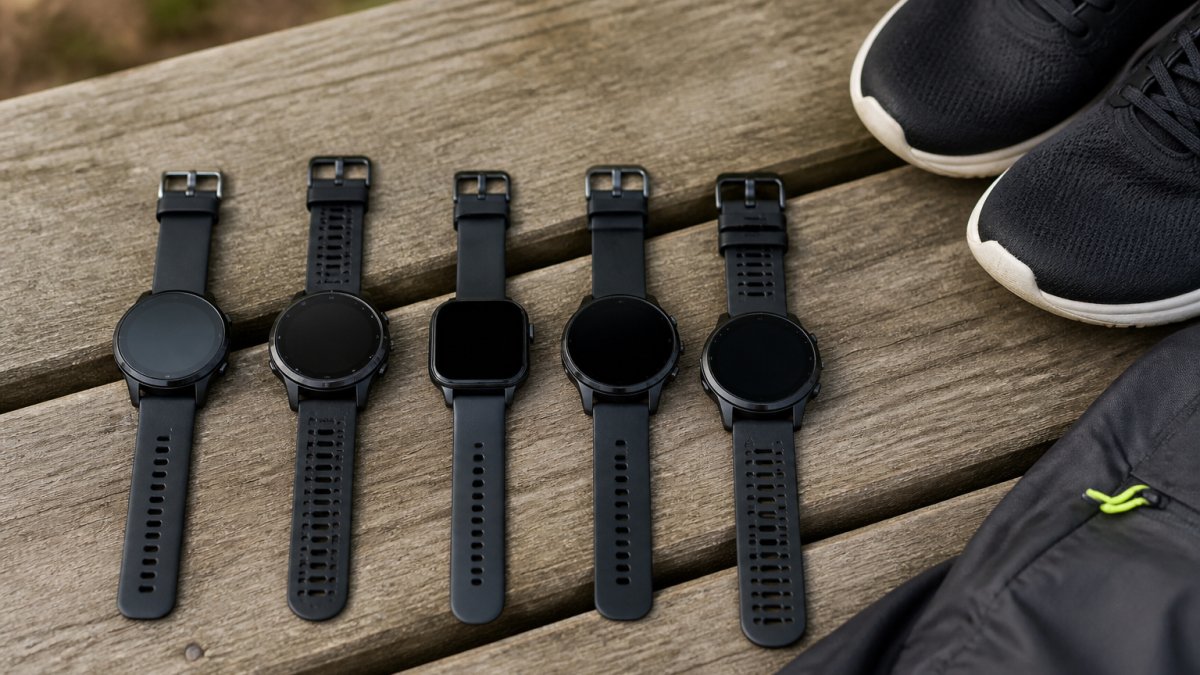
The best GPS running watch under £200 is one that pairs dependable satellite tracking with battery life that matches your training. You don’t need to spend more to get the essentials right.
When you compare models in this price band, look at three things first: how quickly the watch locks onto satellites, how long it lasts in GPS mode, and whether the heart rate readings hold steady during intervals. Get those right and you have a watch that will serve you for years.
Quick Comparison
| Priority | What to Check | Why It Matters |
|---|---|---|
| Pace accuracy | GPS lock speed and consistency | Unreliable pace ruins interval training |
| Battery | Hours in full GPS mode | Must outlast your longest run |
| Heart rate | Wrist sensor stability | Erratic readings make zones useless |
| Display | Glanceable in sunlight | You check it mid-run, not at a desk |
| Durability | Water resistance rating | Rain, sweat and washing up all happen |
Running Watch Battery Life: How Long Do Budget Models Last?
Battery life is where budget watches separate themselves. A watch rated for a few hours in GPS mode suits a 5k runner perfectly well. A marathon trainee needs considerably more headroom, especially if they run slowly or stop to walk.
The practical rule we’d give any runner: buy a watch whose GPS battery life is at least double your longest planned session. That buffer covers cold weather, which drains batteries faster, and the odd forgotten charge.
Most affordable models handle shorter sessions comfortably. Where they struggle is multi-hour efforts, particularly if you’re also playing music or using navigation. If long runs are your priority, battery becomes the single most important specification on the box.
Charging a watch the night before a long run and assuming it will last is the most common mistake we see. Cold mornings can cut GPS battery life noticeably, so charge it the morning of, not the night before.
Running Watch Heart Rate Accuracy: Wrist vs Chest Strap
Wrist-based heart rate is convenient and good enough for steady runs. It is not good enough for interval training, where your heart rate changes quickly and a wrist sensor lags behind.
Chest straps remain the more accurate option because they sit closer to your heart and measure electrical signals rather than blood flow. For easy runs and general fitness, a wrist sensor is fine. For structured sessions where you’re targeting specific zones, a strap is worth the extra purchase.
A useful compromise: use the wrist sensor for daily runs and wear a chest strap for your hard sessions. You get convenience most days and precision when it counts.
Wrist heart rate suits steady, conversational runs. Chest straps suit intervals and zone training. Match the tool to the session, not the other way around.
GPS Watch Versus Fitness Tracker for Running: Which Do You Need?
A GPS watch is built for runners who want pace, distance and route data without carrying a phone. A fitness tracker is built for general activity, step counts and everyday wellness, and often relies on a connected phone for GPS.
If running is your main activity, choose a GPS watch. If running is one part of a broader fitness routine and you always carry your phone, a tracker may cover your needs.
The dividing line is simple: do you want to run without your phone and still know your pace? If yes, you need GPS built into the watch.
Common Mistakes When Buying Running Watches Under 200
The biggest mistake is buying for the features you imagine you’ll use rather than the ones you’ll actually use. Runners consistently overestimate how much they’ll engage with advanced metrics.
Other pitfalls worth avoiding:
- Choosing a watch too large or heavy for your wrist, which you’ll notice on every run
- Ignoring battery life because the spec sheet looks impressive elsewhere
- Assuming a higher price guarantees better GPS accuracy
- Skipping the return window, then discovering the display is unreadable in sunlight
- Forgetting that a watch is only as useful as the training plan behind it
That last point deserves emphasis. A watch records your effort; it doesn’t create it. This is where we at The Running Bug take a slightly different view from the usual gear advice. The runners who stay consistent are rarely the ones with the most expensive kit. They’re the ones with a goal, a date, and something to show for it at the end.
If you’re building consistency, a virtual challenge can give your runs a purpose that a watch alone never will. We offer distances from 5k to marathons, a global community of runners, and a medal for every result you submit. New members get 15% off their first race, and every challenge supports charitable causes.
Conclusion: Choosing the Right Watch for Your Runs
The hard part of running was never the watch. It’s the motivation to lace up on the days you’d rather not.
Pick a watch that covers your essentials, then give those runs somewhere to go. At The Running Bug, we’ve built a community of over 3,800 participants across 100+ themed races, with more than £8,000 raised for charity along the way. You choose the distance, run it wherever suits you, and submit your evidence to earn your medal.
Get started with The Running Bug and turn every run into something worth finishing.
Frequently Asked Questions
What is the best running watch under £200?
The best running watch under £200 depends on your priorities. If you want long battery life, look for models that last over 20 hours in GPS mode. For accurate heart rate, wrist-based sensors have improved but a chest strap still wins. Focus on GPS accuracy, battery life, and comfort. Brands like Garmin, Coros, and Polar offer solid options in this range. Always check user reviews for real-world performance.
Can you get a good GPS running watch for under £200?
Yes, you can get a good GPS running watch for under £200. Many models now include built-in GPS, heart rate monitoring, and smart notifications. They may lack advanced features like music storage or maps, but for basic run tracking they perform well. Look for watches with GLONASS or Galileo support for better accuracy. Battery life typically ranges from 10 to 30 hours in GPS mode.
Which budget running watch has the best battery life?
Battery life varies by model. Some budget running watches offer up to 30 hours in GPS mode, while others last around 10 hours. If you run long distances or multiple times per week, aim for at least 15 hours. Watches with larger batteries tend to be bulkier. Check the specifications for GPS battery life, not just smartwatch mode, as that is what matters for runners.
Are cheap running watches accurate?
Cheap running watches can be accurate, but there are trade-offs. GPS accuracy is generally good in open areas, but may struggle in cities or forests. Heart rate accuracy from wrist sensors can vary, especially during intervals. For better accuracy, consider using a chest strap. Look for watches with multiple satellite systems (GPS, GLONASS, Galileo) for improved tracking.