
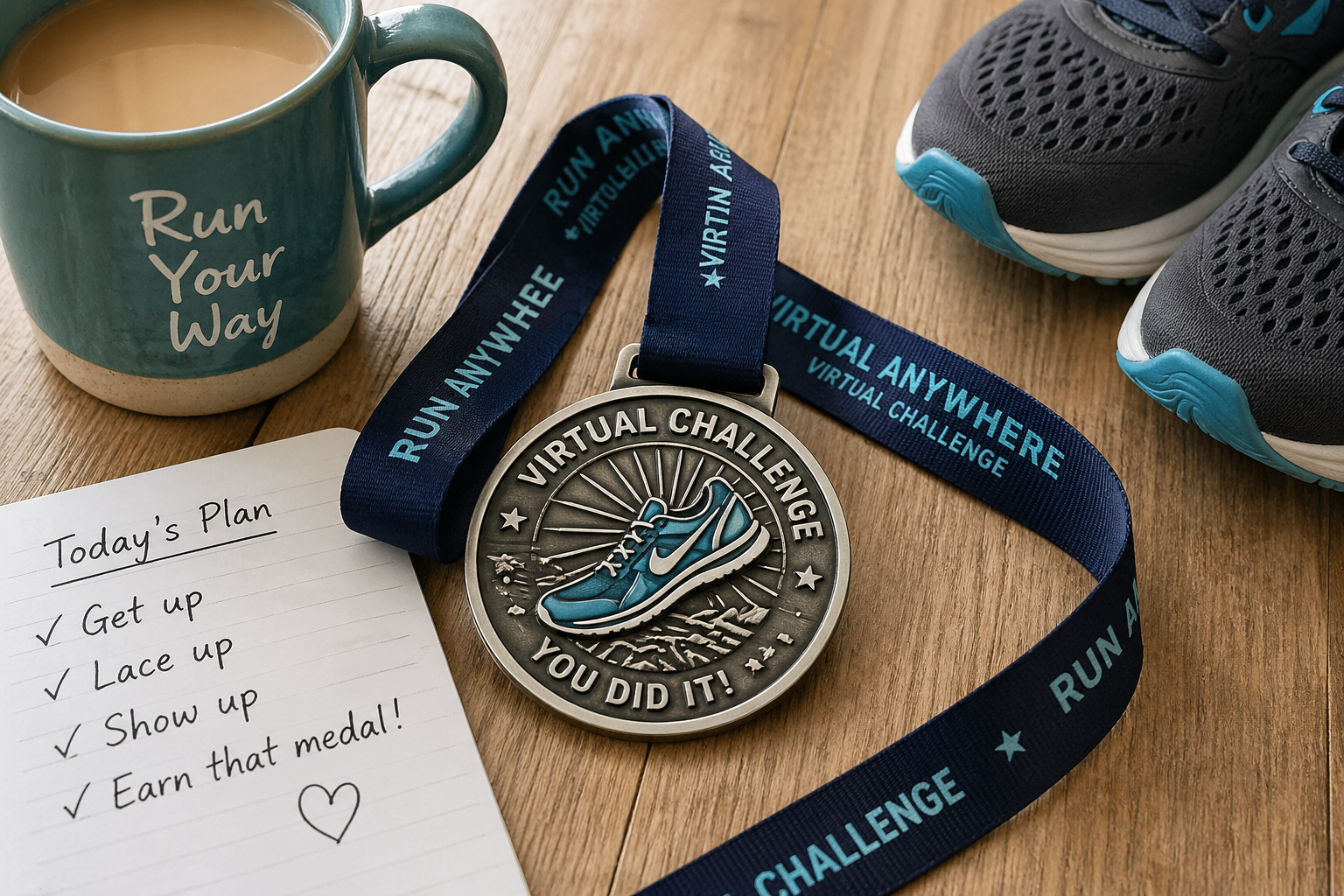
Some weeks, fitting in a run feels harder than the run itself. Work shifts move, school pickups appear out of nowhere, the weather turns, and suddenly that local race you meant to enter has come and gone. That is exactly why virtual running challenges with medals have become such a popular way to stay active. They give you a clear goal, a real sense of achievement and the freedom to run when and where it suits you.
For a lot of people, that flexibility is the difference between thinking about running and actually doing it. You do not need to travel, queue for a start line or build your weekend around somebody else’s timetable. You choose the distance, complete it at your own pace and still earn something tangible at the end. That simple formula works brilliantly because it fits real life.
What makes virtual running challenges with medals so motivating?
Running is easier to stick with when there is something specific to aim for. A vague promise to get fitter can help for a few days, but a challenge with a finish point tends to carry more weight. Once you have entered, your run stops being just another workout. It becomes progress towards a medal you want to earn.
That medal matters more than some people expect. A physical reward gives the effort a proper full stop. You are not just ticking off miles on an app and moving on. You are completing something, proving it to yourself and having a keepsake arrive through the post that says you did it. For beginners, that can be a huge confidence boost. For experienced runners, it keeps training fresh between larger events.
There is also a psychological benefit in making exercise feel enjoyable rather than punishing. A themed challenge, a shiny medal and a clear target turn routine miles into something more engaging. It is still your effort that gets you there, but the experience feels lighter, friendlier and easier to repeat.
Why this format suits busy people
Traditional races can be brilliant, but they are not always practical. They often mean early starts, travel costs, set dates and the pressure of performing on one particular morning. If you are juggling work, family life or changing routines, that can be enough to stop you entering at all.
Virtual challenges remove a lot of that friction. You can head out before breakfast, use your lunch break, run after the kids are in bed or split your miles around your week if the challenge allows. You can take part from your local park, your treadmill, a seafront route on holiday or the streets around your neighbourhood. That freedom makes the challenge feel accessible instead of stressful.
This matters for more than convenience. When running works around your life, it is much easier to stay consistent. Consistency is where confidence grows. You are more likely to keep showing up when the plan feels realistic.
Virtual running challenges with medals are not just for seasoned runners
One of the best things about this format is how inclusive it is. You do not need to be fast. You do not need race-day experience. You do not need to feel like a “proper runner” before you start.
If you are new to running, a virtual challenge can be a much gentler way in. There is less pressure, no crowded start pen and no need to compare yourself with everyone around you. You can run, jog or walk your distance and focus on your own achievement. That makes the experience feel far more approachable.
Families often find them appealing for the same reason. Kids can get involved, parents can fit movement into busy days and everyone has something to work towards. The medal gives it a sense of occasion, even if the challenge happens close to home.
For regular runners, the appeal is slightly different. Virtual challenges can break up a training block, add variety between major races or provide a motivating goal when there is nothing official in the diary. Sometimes you do not want the cost, travel and intensity of a big event. Sometimes you just want a reason to get out and run.
The medal is more than a bonus
It is easy to dismiss medals as a nice extra, but for many runners they are a big part of the appeal. Recognition matters. When you have put in the effort, it feels good to have something you can hold, display or collect.
A good medal turns a run into a memory. It might mark your first 5K, your return after time away from exercise, a charity effort, or the moment you finally stretched to a half marathon. That emotional value is hard to get from a digital badge alone.
There is also a collecting element that keeps people coming back. Different themes, designs and distances create a sense of progression. You are not simply exercising because you should. You are building a streak of achievements that feels personal and rewarding.
Choosing the right challenge for you
Not every challenge suits every runner, and that is a good thing. The right one depends on what will keep you motivated.
If you are starting out, a 5K or flexible any-distance challenge is often the sweet spot. It gives you a target that feels achievable without being overwhelming. If you already run regularly, you may prefer a 10K, half marathon or marathon challenge that gives your training more structure.
Theme matters too. Some people are motivated by seasonal events, some by charity-focused challenges, and some simply love a medal design that catches their eye. There is no wrong reason to enter if it gets you moving.
It also helps to be honest about your schedule. If your routine is unpredictable, choose a challenge that gives you room to complete it without pressure. Motivation grows when the goal feels exciting, but it lasts when the goal also feels realistic.
How to get the most out of a virtual challenge
The runners who enjoy these challenges most are usually the ones who make the experience feel real from day one. Pick your route in advance, decide when you are likely to run and treat the challenge like an appointment with yourself.
It can help to share your goal with family or friends, especially if accountability gives you a push. Some runners like to take progress photos, log each run carefully or plan a favourite route for the final miles. Small rituals make the finish more satisfying.
Pacing yourself matters as well. Because virtual events are flexible, it can be tempting to keep delaying or to go too hard too soon. A steady, manageable approach usually works better. If the challenge can be completed at your own pace, use that freedom wisely. The goal is to finish feeling proud, not flattened.
And when your medal arrives, let yourself enjoy it. That moment is part of the reward. It is proof that your effort counted.
What to look for in a good virtual challenge provider
A strong virtual challenge should feel simple, clear and worth your time. The process needs to be easy to follow, from choosing your event to submitting your evidence and receiving your medal. Confusing rules or vague fulfilment can take the shine off the experience.
Good medal quality matters too. If medals are part of what motivates you, they should feel like a real reward, not an afterthought. Clear delivery information, fair pricing and a range of distances also make a difference, especially if you think you may want to enter more than one challenge.
Community can be another plus. Even though you are running on your own schedule, it still helps to feel part of something bigger. Seeing other people complete their challenges, share photos and celebrate milestones adds energy without adding pressure. That balance is one reason brands such as The Running Bug connect so well with runners who want flexibility and encouragement in equal measure.
Are virtual challenges better than in-person races?
It depends what you want from the experience. If you love crowds, closed roads and the buzz of event day, an in-person race offers something special. Virtual challenges do not try to copy that exactly.
What they do offer is freedom, lower pressure and everyday accessibility. For many people, that is not a compromise. It is the whole point. You can still set meaningful goals, complete real distances and earn proper rewards, without the barriers that often come with traditional events.
A lot of runners enjoy both. They use virtual challenges to stay motivated through the year, build confidence and keep collecting achievements between bigger race days. It is not about choosing one forever. It is about choosing what works for you right now.
If running feels easier when it fits your life instead of taking it over, virtual running challenges with medals make a lot of sense. They turn ordinary weeks into opportunities, give effort a finish line and remind you that every mile counts. Sometimes the best motivation is simply having a goal you can reach, a medal you want to earn and the freedom to do it your way.