
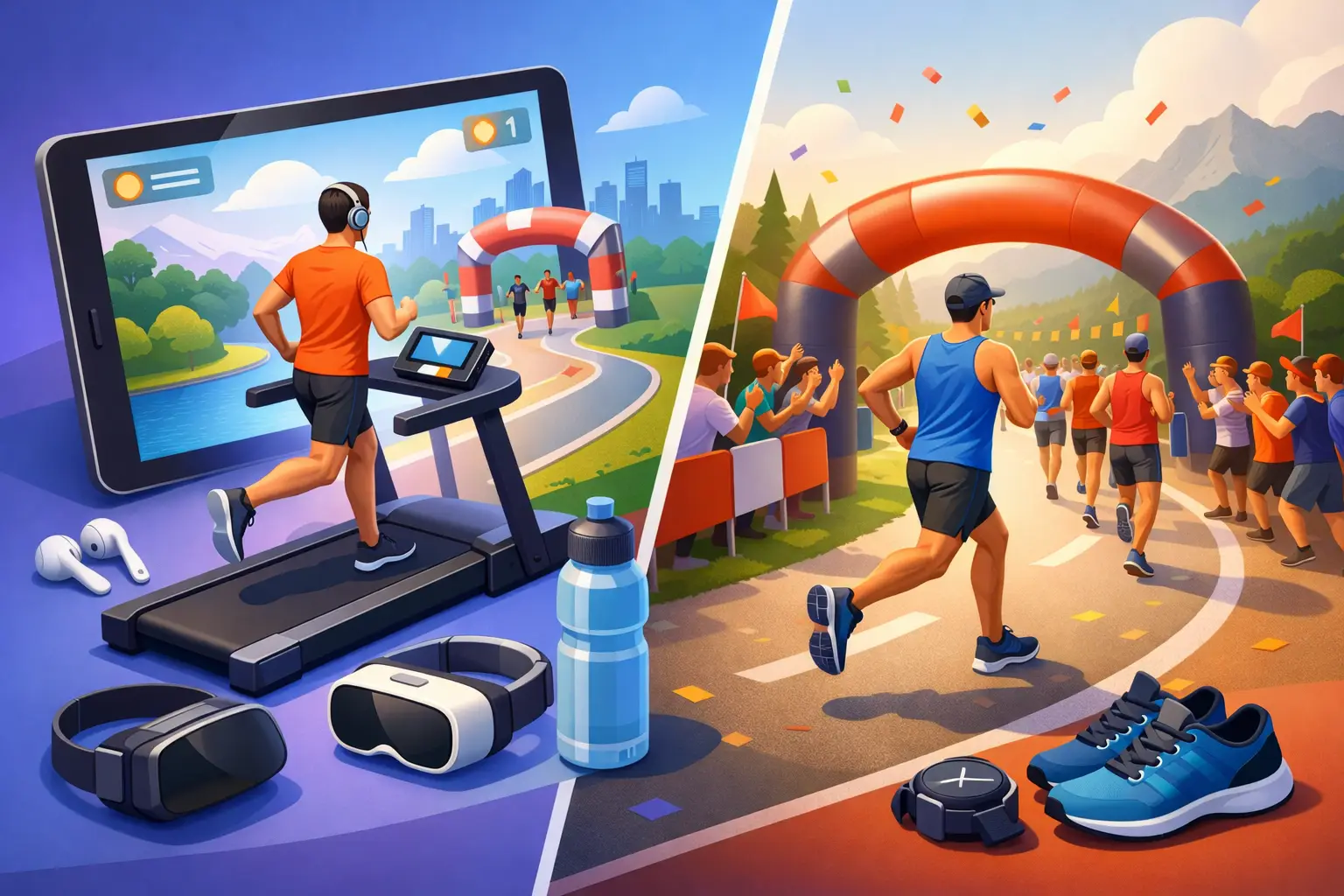
Some runners love the buzz of a start line. Others would rather head out after work, pick their own route and finish with a medal earned on their own schedule. If you are weighing up a virtual race vs in-person race, the right choice is less about what looks most impressive and more about what keeps you moving.
That matters because the best race is the one you will actually enjoy, complete and want to do again. For some people, that means crowds, closed roads and a big event atmosphere. For others, it means no travel, no pressure and the freedom to run or walk when life allows.
Virtual race vs in-person race: the real difference
At a basic level, an in-person race happens at a fixed location on a fixed date. You turn up, collect your number, follow the official route and cross a physical finish line with everyone else. There is structure built in from the moment you sign up.
A virtual race works differently. You choose the challenge, complete the distance in your own time and submit your result or evidence afterwards. You still get the goal, the sense of achievement and often a brilliant medal at the end, but without needing to be in one place at one time.
Neither option is automatically better. They simply solve different problems. In-person races create atmosphere and occasion. Virtual races create flexibility and remove many of the barriers that stop people entering in the first place.
Why flexibility changes everything
For a lot of everyday runners and walkers, flexibility is not a bonus. It is the reason they can take part at all.
Work shifts change. Children get ill. Weekends fill up. Travel costs add up. Training can be inconsistent, especially if you are building confidence or returning after time away. A virtual race lets you fit the challenge around your real life rather than rearranging your life around the race.
That can make a huge difference for beginners. If the idea of a mass start feels intimidating, completing a challenge on your local route can feel far more manageable. You can pick a quiet path, stop if needed, break the distance into a pace that suits you and still earn that finish-line feeling.
Parents often find this especially helpful. So do walkers, charity participants and people who want an active goal without the stress of early alarms, packed car parks and standing around in a queue before they even begin.
In-person races, of course, have their own kind of motivation. Once you have paid, planned and pinned on your number, it is harder to back out. The event date gives you a fixed target. If you thrive on commitment and external structure, that can be exactly what you need.
Atmosphere vs comfort
The biggest thing an in-person race offers is energy. There is something special about being surrounded by other people all doing the same thing. The countdown, the cheering, the water stations and the final sprint to the line can carry you through tougher miles.
That atmosphere can make runners feel part of something bigger. It can also help you push harder than you would on your own. If you enjoy event-day excitement, a virtual format may not replicate that exact feeling.
But comfort has value too. Virtual racing gives you control over your environment. You can choose a flat route, avoid bad weather where possible, head out at your favourite time of day and create a calmer experience. For people who dislike crowds or feel nervous about keeping up, that comfort often leads to a better overall experience.
There is also less friction. No long journey home. No wondering where to park. No standing in a chilly field waiting for a delayed start. You run, you finish, and you get on with your day.
Cost matters more than people admit
When comparing a virtual race vs in-person race, price is not just about entry fees. It is about the full cost of taking part.
An in-person event may include travel, parking, accommodation, food on the go and sometimes higher base entry prices. That does not mean it is poor value. If you want the full event experience, it can be money well spent. But it does mean some races become occasional treats rather than something you can do regularly.
Virtual races are usually easier on the budget. With no need to travel and lower overheads overall, they can make frequent participation much more realistic. That is ideal if you stay motivated through regular goals, themed challenges or collecting medals across the year.
For families, the difference can be even more noticeable. A kids’ race or family challenge is far easier to fit in when you are not paying for a full day out before anyone has even started moving.
Motivation looks different for different people
A lot of race advice assumes everyone is motivated by speed, rankings or official results. In reality, many people are motivated by consistency, fun and having a reason to get outside.
That is where virtual events often shine. A themed challenge, a clear target and a medal waiting at the end can be exactly the push someone needs to stay active. It turns a normal walk, jog or run into something more memorable.
For some, that reward matters. Not because they are childish or less serious, but because visible progress works. A medal on display can remind you what you have achieved and encourage you to sign up again.
In-person races can be highly motivating too, especially if you enjoy direct comparison, race-day adrenaline or chasing a personal best on an official course. If your goal is to test yourself against the clock under standard event conditions, an in-person race often makes more sense.
If your goal is simply to keep moving, build confidence and enjoy the process, virtual can be the stronger fit.
Which format suits beginners best?
For many beginners, virtual racing is the gentler starting point. It removes the pressure of a crowd and gives you room to learn what works for you. You can practise pacing, choose a familiar route and complete the distance without worrying about whether everyone else looks more experienced.
That does not mean in-person races are only for seasoned runners. Plenty are welcoming and supportive. But they can still feel daunting if you are brand new, especially if you are unsure about pace or race etiquette.
Virtual events also help if you need a stepping stone. Completing a 5K on your own terms can build the confidence to enter a live event later. It is not one or the other forever. Plenty of people enjoy both, using virtual races for regular motivation and in-person races for standout occasions.
Virtual race vs in-person race for goals and lifestyle
If you are training for a specific time, enjoy big crowds and want the full race-day buzz, an in-person race may suit you best. The atmosphere can lift your performance, and the fixed date gives your training a clear focus.
If your life is busy, your confidence is still growing, or you prefer activity to fit around your schedule, virtual racing is often the smarter choice. It is especially useful if you like entering multiple challenges through the year, trying different distances or taking part with family members who all move at different paces.
There is also a middle ground. Some runners use virtual events to stay consistent between bigger in-person races. Others discover they do not actually need the event-day fuss to feel proud of what they have done. A challenge completed on a rainy Tuesday evening still counts.
That is one reason virtual events have such strong appeal. They make achievement more accessible. You do not need to be fast, local to a major city or free on one particular Sunday morning to take part.
So which one is better?
Better for what is the real question.
If you want atmosphere, spectators and an unforgettable day out, go in-person. If you want freedom, lower cost and a challenge that works around your life, go virtual. If you want both, do both. There are no extra points for choosing the option that looks toughest on paper if it leaves you stressed, out of pocket or put off entering again.
At The Running Bug, that is exactly why virtual challenges work so well for so many people. You still get the goal, the motivation and the medal, but in a way that feels doable and enjoyable.
The best race format is the one that keeps you coming back, because staying active should feel rewarding, not complicated.