

Table of Contents
- What Changes About Running Clothes After 40
- Quick Comparison: Types of Running Kit for Women Over 40
- Women’s Running Leggings: What to Look For
- Supportive Sports Bras for Running: Getting the Fit Right
- Running Clothes for Cold Weather: Layering That Works
- Running Clothes for Hot Weather: Staying Cool and Covered
- Common Mistakes When Choosing Running Clothes Over 40
- Conclusion: Building a Kit That Keeps You Running
- Frequently Asked Questions
Last Updated: 7 October 2026
What Changes About Running Clothes After 40
Running clothes for women over 40 need to work harder than they did a decade ago. Body temperature regulation shifts, skin gets more sensitive to chafing, and joints want a bit more cushioning from what you wear. None of that means you need a completely different wardrobe. It means you need to be pickier about fabric, fit and support.
At The Running Bug, we see thousands of women in their forties and beyond taking on virtual races from 5k to marathon distance. The kit questions come up again and again. The good news: getting this right is simpler than the sportswear aisles suggest.
This guide covers what to look for in leggings, sports bras, cold-weather layers and hot-weather kit. We will also flag the mistakes that cause most discomfort, so you can build a running wardrobe that lasts.
The biggest shift after 40 is not fitness. It is fabric and fit. Prioritise moisture-wicking materials, flat seams and a bra that holds without digging in.
Quick Comparison: Types of Running Kit for Women Over 40
Different runs call for different kit. Here is how the main categories compare, so you can see at a glance where to spend your money first.
| Kit Type | What to Look For | Best For | Priority |
|---|---|---|---|
| Women’s running leggings | High waist, flat seams, pockets | Everyday training | Buy first |
| Supportive sports bras | Encapsulation, adjustable straps | All runs, especially longer ones | Buy first |
| Cold-weather layers | Base layer plus windproof shell | Winter and early mornings | Seasonal |
| Hot-weather kit | Light colours, loose fit, wicking fabric | Summer and indoor sessions | Seasonal |
| Accessories | Moisture-wicking socks, cap | Chafing and sun protection | Add later |
If you are starting from scratch, buy the leggings and bra first. They do the most work on every single run.
Women’s Running Leggings: What to Look For
The best women’s running leggings for over-40 runners have a high, wide waistband, flatlock seams and fabric that moves sweat away from skin. Compression is optional. Comfort is not.
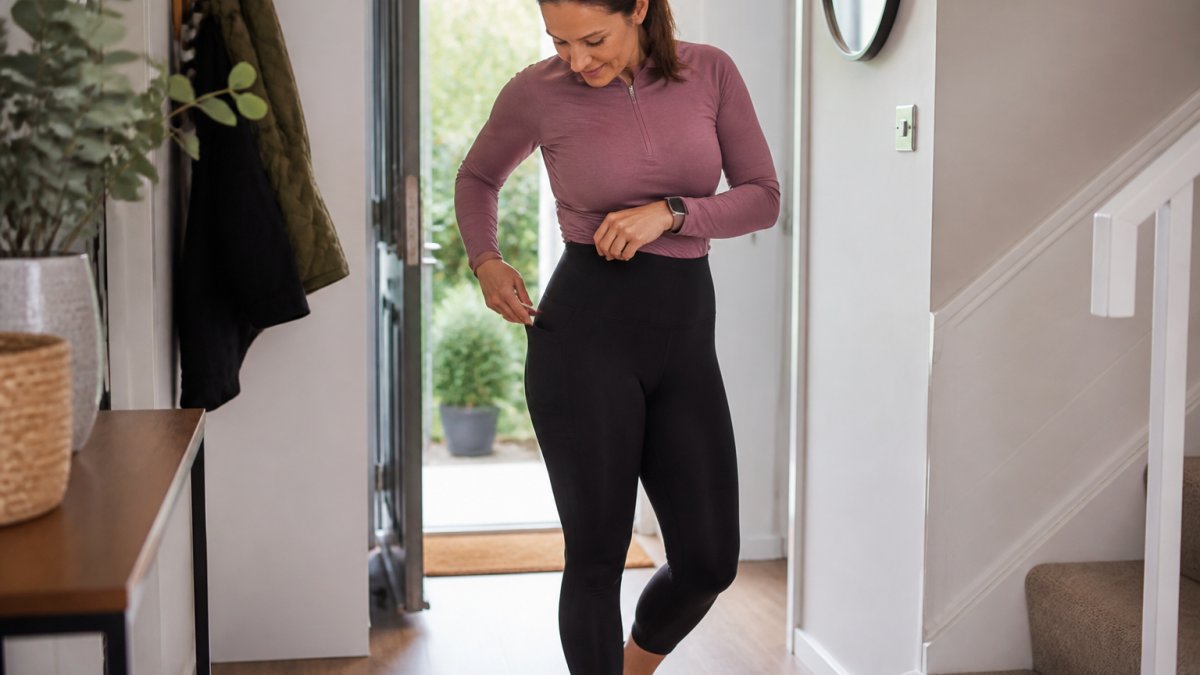
Prioritising these functional details ensures your gear remains comfortable during long efforts, providing a solid foundation for building stylish outfits for women that transition seamlessly from the track to the rest of your day.
A few details matter more than brand names:
- Waistband height. A wide, high band stays put and avoids the roll-down that plagues mid-rise styles.
- Seam placement. Flatlock seams reduce rubbing on inner thighs, a common complaint as skin thins with age.
- Fabric weight. Look for a dense, opaque knit that wicks moisture and does not go see-through when stretched.
- Pockets. A secure phone pocket means you can run without a belt or armband.
A common mistake is buying leggings a size too small in the hope they will “hold everything in”. They will not. They will dig in at the waist and ride up. Buy your true size.
Check the crotch gusset before you buy. A diamond-shaped panel instead of a single centre seam removes the most common source of chafing on longer runs.
Supportive Sports Bras for Running: Getting the Fit Right
A supportive sports bra for running should stop movement without restricting your breathing. For most women over 40, that means an encapsulation style rather than a simple compression crop.
Encapsulation bras have separate cups that hold each breast individually. Compression bras squash everything flat. For larger cup sizes, encapsulation wins every time.
Fit checks that matter:
- The band should sit snug and level, not ride up at the back.
- Straps should not dig into your shoulders or slip down.
- You should be able to take a full, deep breath without strain.
- No gaping at the top of the cups when you move.
Replace a running bra when the band loses its stretch or the fabric pills. A bra that has lost its hold is doing nothing for you.
Running Clothes for Cold Weather: Layering That Works
Running clothes for cold weather work on a three-layer system: a wicking base layer, an insulating mid-layer, and a windproof outer shell. You add or remove layers as the temperature shifts.
- Base layer: a close-fitting long-sleeve top in a synthetic or merino blend. This moves sweat off your skin.
- Mid-layer: a light fleece or thermal top for the coldest days. Skip it if you warm up fast.
- Outer layer: a windproof, water-resistant jacket. It should be thin, not bulky.
The old rule of thumb still holds: dress as if it is a few degrees warmer than it is. You will heat up within the first ten minutes. Leggings with a brushed inner face work well below about 5°C, while standard leggings are fine above that.
Do not forget your extremities. Gloves, a headband that covers your ears, and moisture-wicking socks make more difference than an extra torso layer.
Running Clothes for Hot Weather: Staying Cool and Covered
Running clothes for hot weather should be light in colour, loose enough to allow airflow, and made from fabric that wicks sweat fast. Cotton is the one material to avoid. It holds moisture, clings, and chafes.
What works in the heat:
- Light-coloured tops that reflect rather than absorb heat.
- Shorts or capris in a wicking fabric, with a liner to prevent rubbing.
- A breathable cap to shade your face and hold sweat.
- Thin, seamless socks to reduce blister risk.
If you run in the middle of the day, choose a looser fit. A tight top traps heat against your skin. Save the close-fitting kit for cooler sessions.
Do not wear a waterproof jacket in warm weather. It traps heat and sweat with nowhere to go, which raises your risk of overheating on a long run.
Common Mistakes When Choosing Running Clothes Over 40
Most kit problems come down to a handful of avoidable mistakes. Fix these and you will feel the difference on your very next run.
- Buying for looks over function. A stylish crop top that rides up will not get worn twice.
- Ignoring the bra. A worn-out bra causes more discomfort than any other item of kit.
- Wearing cotton. It holds sweat and causes chafing on longer distances.
- Sizing down. Tight kit restricts movement and causes rubbing. Buy your true size.
- Skipping the test run. Always do a short run in new kit before a long one or a race day.
- Neglecting socks. Thin, seamless, wicking socks prevent the blisters that ruin a run.
The pattern is clear: comfort beats appearance every time. Buy for the run, not the mirror.
Conclusion: Building a Kit That Keeps You Running
The right kit removes the small daily frictions that quietly erode motivation. When your leggings do not ride up and your bra does not dig in, running simply feels easier. That consistency is what carries you through a training block.
That is the whole idea behind The Running Bug. We run flexible virtual challenges from 5k to marathon distance, so you can train wherever you are and earn a medal for the miles you put in. Our community keeps you accountable, our themed races give you something to aim at, and every entry supports charity causes. New members get 15% off their first race.
Get started with The Running Bug, submit your evidence when you finish, and let the medal on your wall remind you what consistency built.
Frequently Asked Questions
What should a woman over 40 wear for running?
Start with a supportive sports bra, moisture-wicking top and high-waisted leggings, then layer according to the weather. In cold conditions add a long-sleeve base layer and light jacket; in heat choose lighter fabrics and looser fits. The priority is comfort and support rather than fashion, so test each piece on a short run before committing to longer distances.
What should women over 40 look for in running leggings?
Look for a wide, high waistband that stays put without digging in, flatlock seams to reduce chafing, and a fabric with enough stretch to move with you. Pockets for keys and a phone are a practical bonus. Many women over 40 also prefer leggings with a slightly thicker fabric for coverage and confidence, especially on cooler morning runs.
Are running clothes different from gym clothes?
Yes. Running clothes are designed for repetitive forward motion, so they tend to be lighter, more breathable and cut to reduce chafing. Gym wear often prioritises stretch for lifting or studio classes and can be heavier. For running, moisture-wicking fabrics and flat seams matter more than cushioning or compression features built for weights.
How can I prevent chafing when running?
Choose seamless or flatlock-stitched garments, avoid cotton next to the skin, and make sure nothing rubs at the bra band, inner thighs or underarms. A thin layer of anti-chafe balm on problem areas helps on longer runs. Wash kit regularly, as salt and detergent residue can make fabric rougher against the skin.
What should I wear for running in cold weather?
Use layers you can adjust: a moisture-wicking base layer, an insulating mid-layer if it is very cold, and a wind-resistant outer layer. Add gloves, a headband or hat, and consider tights rather than shorts. You should feel slightly cool when you step outside, because you will warm up within the first ten minutes of running.