
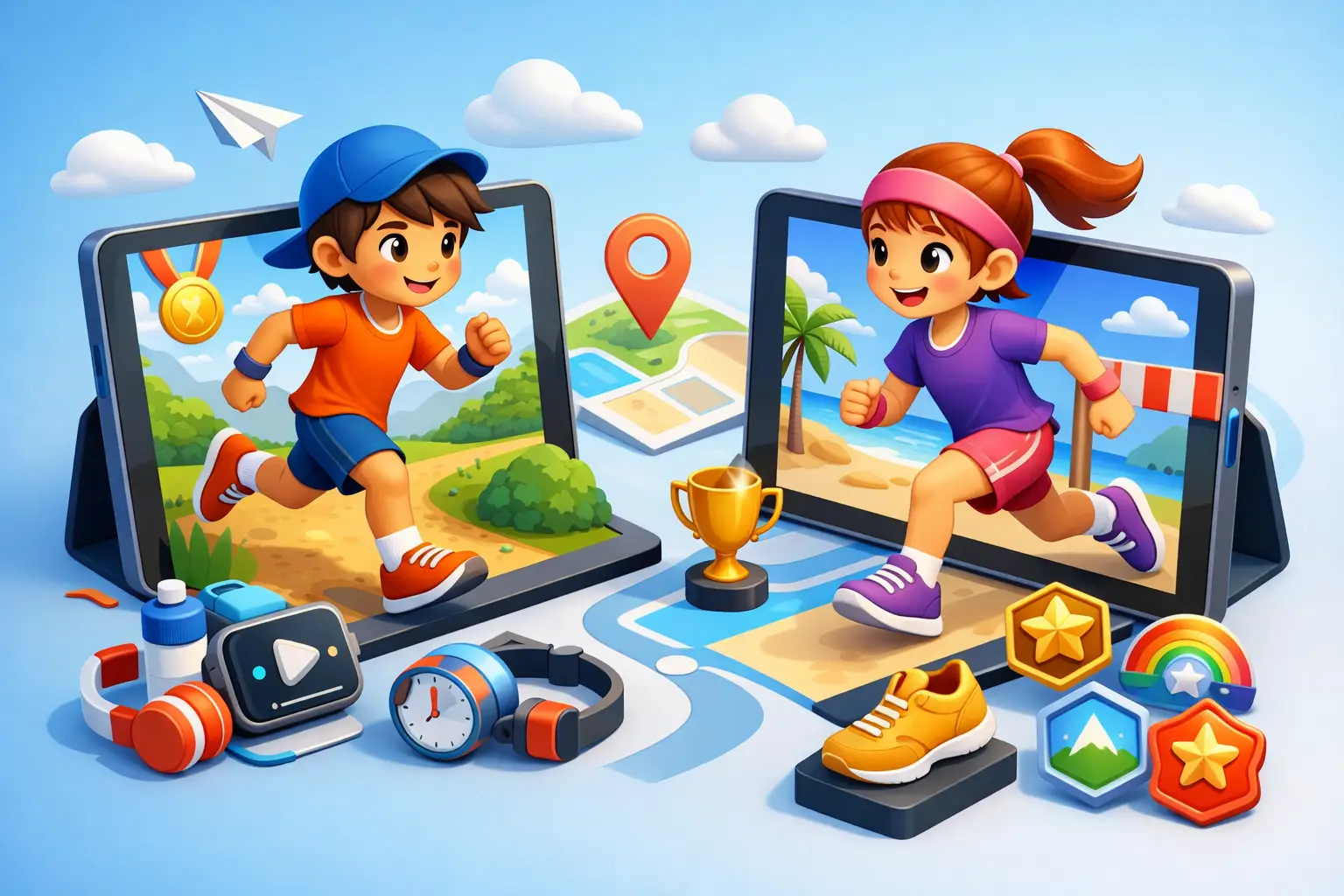
Trying to get children moving after school can feel harder than the school run itself. One day they are racing about the garden, the next they are glued to a screen and bargaining for five more minutes. That is exactly why virtual running challenges for kids have become such a practical option for families who want a simple, flexible way to keep activity fun.
Unlike a traditional race, there is no early start, no travel stress and no pressure to keep up with anyone else. Children can walk, jog or run at their own pace, in a park, on holiday, around the local streets or even during a family trip to the woods. For parents, that flexibility matters. For children, the real magic is that it still feels like an event, especially when there is a medal waiting at the end.
Why virtual running challenges for kids work so well
Children are often much more motivated by a clear goal than by being told to “go and get some exercise”. A challenge gives them something to aim for. It might be a set distance, a themed medal or a target to complete over several days. Suddenly the walk to school, the lap of the field or the weekend family jog feels part of something bigger.
That sense of achievement is a big part of the appeal. A child does not need to be sporty to enjoy a challenge. In fact, virtual events often suit beginners better than in-person races because there is less pressure and more freedom. They can stop for breaks, split the distance up and complete it in a way that feels manageable.
It also helps that virtual events are built around real life. Families are busy. Weekends disappear into clubs, birthday parties and visits to grandparents. With a virtual challenge, children can take part when it suits the household rather than trying to make everything fit around a fixed race morning.
What makes a good kids’ challenge?
Not every event aimed at children is genuinely child-friendly. The best ones keep things straightforward and rewarding. The distance should feel achievable, the theme should be fun and the process should be easy for parents to manage.
A good challenge usually starts with a simple promise. Choose your event, complete the distance your way, send in the evidence and receive the medal. That clarity matters because parents do not want a long list of rules, and children do not want the fun buried under admin.
Themes can make a huge difference too. Many children are far more excited by a race with a colourful identity or collectable reward than by a plain mileage goal. A medal gives the event a finish line, even if the challenge is completed around the local park rather than under an inflatable arch.
There is also a balance to strike with distance. Some children love the idea of a 5K and will tackle it happily over one outing or a few shorter efforts. Others do better with any-distance challenges that let them contribute in smaller bursts. It depends on age, confidence and what your child enjoys. The best challenge is the one they actually want to finish.
How to make it fun without turning it into a chore
The quickest way to take the shine off a kids’ event is to make it feel like homework. Children respond best when the challenge feels playful and achievable, not like a test. That means letting them go at their own pace and keeping the tone positive.
Some families like to turn the event into a mini occasion. You might head to a favourite trail, let your child choose the route, pack a snack for afterwards or take a finishing photo once the distance is done. Those small moments matter because they help build positive memories around movement.
It is also worth resisting the urge to over-coach. Most children do not need split times or detailed pacing advice. They need encouragement, a bit of excitement and permission to walk when they want to. Praise effort more than speed. If they complete a challenge smiling, that is a win.
For younger children especially, breaking the distance into sections can work better than trying to finish everything in one go. A mile here and a mile there still counts. That flexibility is one of the strongest parts of virtual running. It fits the child, rather than expecting the child to fit the event.
The benefits go beyond fitness
Of course, moving more is good for children’s health, but the value of these challenges is not only physical. Completing an event helps children build confidence. They start to see that they can stick with something, finish it and be proud of the result.
That can be especially useful for children who are not drawn to team sports. A virtual challenge offers structure without the social pressure of PE lessons, clubs or competitive race days. There is still a goal, still a reward and still a sense of participation, but without the worry of being watched or compared.
It can also become a family activity rather than a solo task. Parents, grandparents and siblings can all join in, whether they are walking part of the route or taking on their own challenge alongside the child. For many families, that shared experience is what keeps everyone coming back for another event.
Then there is the reward factor. Medals should not be dismissed as a gimmick. For children, something tangible makes the achievement feel real. A medal hanging on a bedroom wall can be a reminder that effort leads to something positive, and that is a powerful message.
Choosing the right virtual running challenge for your child
Start with personality rather than age alone. Some children love a bigger target, while others need something short and confidence-building. If your child already enjoys parkruns, family walks or school sports, they may be ready for a longer challenge. If they are hesitant, begin with a more flexible distance or one that can be completed over several outings.
Look at what will keep them interested. A strong theme, a bright medal and a sense of occasion often do more than the distance itself. If the event feels exciting from the start, motivation tends to come more easily.
Parents should also consider practical details. How simple is the evidence submission? Is the challenge easy to understand? Does it feel inclusive rather than overly competitive? The smoother the process, the more likely you are to actually follow through.
That is one reason many families like businesses built around flexible participation. The Running Bug, for example, makes the format easy to grasp: choose a challenge, complete it anywhere, submit your evidence and earn your medal. For busy parents, simple usually wins.
When virtual events are better than in-person races
Traditional races still have their place. Some children love the crowd, the start line buzz and the excitement of race-day atmosphere. But that setting is not right for everyone.
Virtual events are often better for families who need flexibility, children who are new to running, or anyone who finds organised events a bit overwhelming. There is no travel cost to think about, no standing around in bad weather waiting for a start, and no pressure to finish within a set environment.
They also suit children whose energy is unpredictable. Some days they will charge ahead. Other days they will moan after ten minutes and need snacks immediately. A virtual challenge gives you room to work with that reality instead of fighting it.
That does not mean virtual is always the better choice. Some children do thrive on the event-day buzz and enjoy seeing lots of other runners around them. But if your main goal is to keep activity enjoyable and realistic, virtual often makes more sense.
Keeping the momentum going after the first medal
The first challenge is usually the easiest because novelty does a lot of the work. The real test is whether children want to do another one. To keep interest high, vary the type of event and avoid making every challenge feel the same.
A new theme, a seasonal event or a charity-linked challenge can refresh the experience. Some families like to space events out so each medal still feels special. Others use them regularly as a gentle way to keep children active through school holidays or quieter months.
It helps to let children have some say. If they choose the challenge, the route or even the post-run treat, they are more invested from the start. Ownership matters, even in small doses.
Most of all, keep the focus on enjoyment. Not every outing has to be fast, tidy or impressive. Sometimes the best challenge is the one completed with muddy trainers, rosy cheeks and a huge grin at the finish.
If you are looking for a way to make movement feel exciting rather than forced, virtual running challenges for kids are a smart place to start. They give children freedom, families flexibility and everyone a reason to celebrate the effort along the way.