
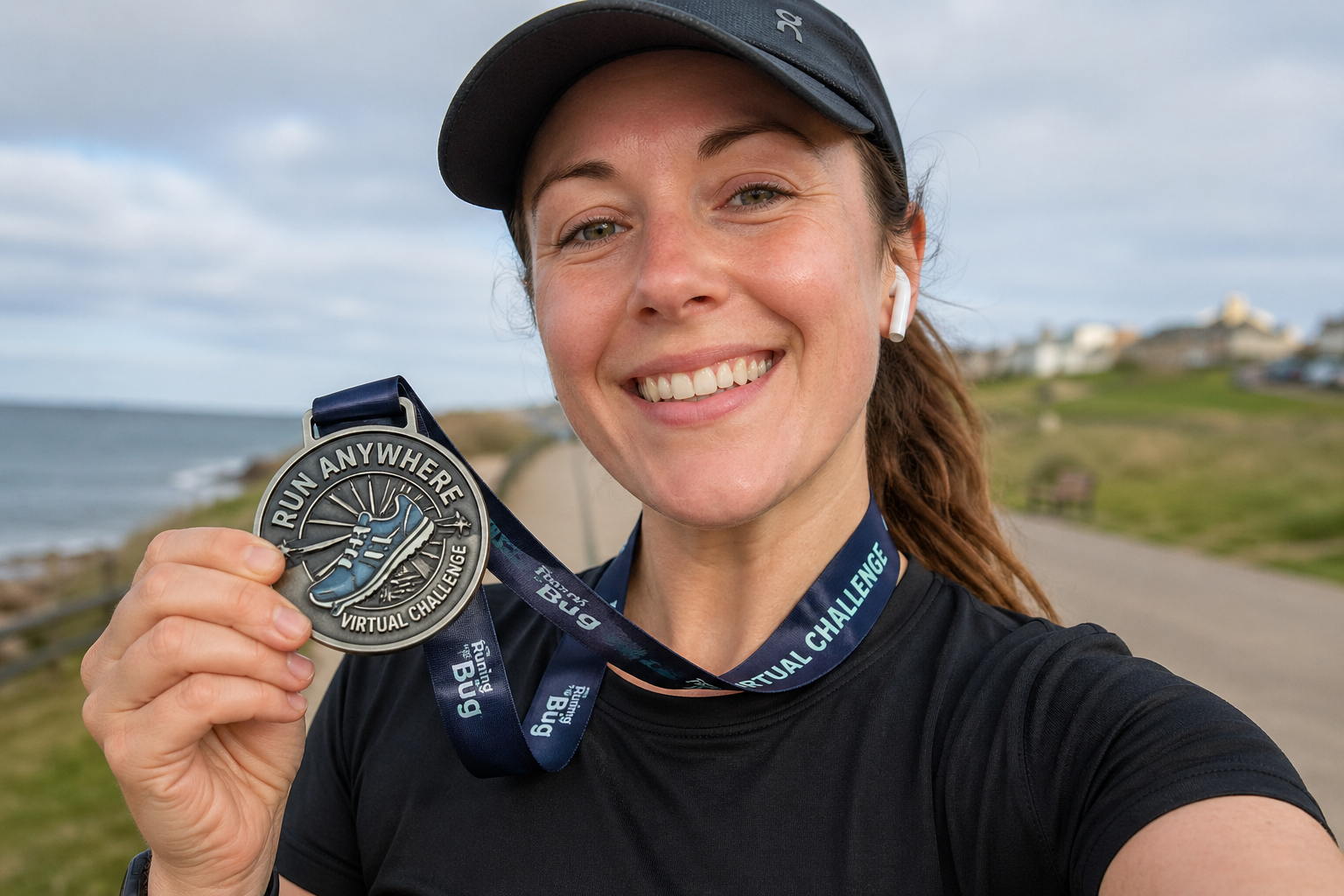
Missed race entry windows, expensive travel, early starts and the pressure of a crowded start line put plenty of people off signing up for events. That is exactly why virtual running challenges that UK runners are choosing have become such a popular way to stay active. They give you a clear goal, the freedom to run on your own terms and the satisfaction of earning something real at the end.
For a lot of people, that flexibility is the difference between thinking about running and actually doing it. You can head out before work, squeeze in a lunchtime 5K, jog after the school run or spread your miles across several days if that suits you better. Instead of trying to shape your life around an event, the challenge fits around your life.
Why virtual running challenges that UK runners choose actually work
Motivation is often the hardest part of running. Not the shoes, not the route, not even the weather – it is getting out of the door when nobody is waiting for you at a finish line. A virtual challenge changes that by giving your training a purpose. You are not just going for a run. You are working towards a distance, a medal and a moment that feels like an achievement.
That reward matters more than some people expect. A medal might sound simple, but it turns effort into something tangible. It is proof that you showed up, kept going and finished what you started. For beginners, that can be a huge confidence boost. For regular runners, it can make the in-between weeks feel more focused and enjoyable.
There is also less intimidation. Traditional events can be brilliant, but they are not for everyone all the time. If you are coming back from a break, building fitness, managing family life or simply prefer running solo, virtual events remove a lot of the barriers. No one cares if you run fast, run-walk or take your time. The point is progress.
What makes a good virtual challenge?
Not all virtual races feel equally motivating. The best ones are clear, simple and rewarding. You should know exactly what distance you are aiming for, how to complete it, how to submit your evidence and what you will receive once you finish. If any part of that feels confusing, enthusiasm can drop quickly.
A good challenge also meets you where you are. Some runners want a straightforward 5K to restart a routine. Others want a half marathon target, a themed event for extra fun or a flexible any-distance option that feels more manageable. Families may be looking for kids’ races, while charity supporters may want their miles to feel connected to a bigger cause. Variety matters because runners are not all solving the same problem.
Then there is the medal. It should feel worth earning. A well-designed physical medal gives the whole experience more meaning, especially when it arrives at your door after you have completed the challenge. That little moment of recognition can carry more motivational weight than a digital badge ever could.
Run anywhere means exactly that
One of the biggest strengths of virtual running challenges is how adaptable they are. You can run in the park, on the treadmill, around your neighbourhood, along the seafront or on your usual weekend route. If your schedule changes, your challenge does not disappear. You just complete it when it works for you.
That makes virtual races especially useful for busy professionals, parents and anyone whose week does not follow a neat pattern. Some people have one long free slot on a Sunday. Others only manage 20 minutes here and there. A flexible challenge respects that reality.
It is also a more approachable option for anyone who feels uneasy about formal race-day environments. There is no travel stress, no queue for the loos, no worrying about whether your pace will hold up around hundreds of other runners. You still get the goal and the reward, but without the parts that can make organised events feel like hard work before you have even started.
Choosing the right challenge for your current fitness
The most motivating challenge is not always the biggest one. It is the one you can realistically complete while still feeling proud of the effort. If you are new to running, a 5K or flexible distance challenge is often the best place to begin. It gives you enough structure to stay focused without feeling overwhelming.
If you already run regularly, you might prefer a 10K, half marathon or marathon challenge that keeps you ticking over between major events. This is where virtual races can be particularly useful. They give experienced runners something fresh to aim at without needing a full training block built around one specific day.
For families, themed kids’ races can make movement feel fun rather than forced. For gift buyers, a challenge can be more memorable than another generic fitness present because it combines experience, achievement and a keepsake. And for charity-minded runners, completing miles for a cause adds another layer of meaning.
The key is honesty. Pick something that stretches you a bit, not something that makes starting feel impossible.
How virtual challenges keep habits going
Running consistency rarely comes from willpower alone. It usually comes from having a reason to keep turning up. A challenge creates that reason. Even on days when motivation dips, there is a target waiting for you.
This is why themed challenges, rewards and repeat participation work so well. Once you have completed one event and received your medal, the next challenge feels easier to say yes to. You already know the process. You know the finish feels good. That turns a one-off effort into a habit loop.
For many runners, the process is simple but effective. Choose your challenge, complete the miles, submit your evidence and wait for the medal. That straightforward journey removes friction, which matters more than people think. The easier it is to take part, the more likely you are to keep going.
There is a social side as well, even if you run alone. Photo reviews, shared finish moments and prize draws can create a sense of community without adding pressure. You still get that feeling of taking part in something bigger, while keeping the freedom to complete it your own way.
The trade-offs to know before you enter
Virtual running is convenient, but it is not identical to an in-person race. If you love the crowd noise, closed roads, water stations and event-day buzz, a virtual challenge will feel different. It is better to see it as a different kind of experience rather than a replacement for every race on your calendar.
You also need a bit of self-direction. Because nobody is physically ushering you to a start line, the motivation has to come from your own goal and the reward you have chosen. For most people, that works beautifully. For others, especially those who rely on external structure, a set race date may still be useful now and then.
That said, these are not really flaws – they are part of the appeal. Virtual challenges suit runners who want freedom, affordability and a confidence-building way to stay moving. Traditional events suit those who want atmosphere and a fixed occasion. Plenty of runners enjoy both.
Who gets the most out of virtual running challenges UK events offer?
Beginners often get the biggest boost because the format makes running feel achievable. There is less fear of judgement, more flexibility and a clear reward at the end. But they are not the only ones who benefit.
Busy adults use virtual challenges to stay consistent without tearing up the diary. Parents use them to fit fitness around family life. Medal collectors enjoy the novelty and sense of progress. Experienced runners use them as motivation between races. Charity supporters like the extra purpose. In other words, the format works because it solves real-life problems, not because it tries to force everyone into the same box.
That is also why brands such as The Running Bug resonate with so many people. The message is simple: run anywhere, earn medals, stay motivated. When life is busy and energy is limited, simple is powerful.
Making your next challenge count
If you are thinking about entering, start with the challenge that feels exciting enough to get you moving and realistic enough to finish. Decide where your miles will fit into the week, choose a route you do not dread and give yourself permission to complete it at your own pace. Fast is not the goal for everyone. Finishing is.
Some weeks you will feel strong and fly through it. Other weeks you will chip away at the distance in smaller pieces. Both count. What matters is that you keep showing up and let the challenge do what it is meant to do – turn intention into action.
A good run does not have to begin under a giant inflatable arch. Sometimes it starts with a quiet decision, a pair of trainers by the door and a medal waiting at the end.