

Table of Contents
- Quick Comparison: Best Running Shoes for Beginners 2026
- How to Choose Running Shoes for Beginners
- 1. Brooks Ghost 18: The Reliable All-Rounder
- 2. ASICS Novablast 6: Bouncy Cushioning for New Runners
- 3. New Balance 1080 v15: Plush Comfort for Joint Protection
- 4. Nike Pegasus 42: Durable and Versatile
- 5. Kiprun Kipride Max: Best Value for Beginners
- 6. Salomon Aero Glide 4: Lightweight Maximalist Ride
- Frequently Asked Questions
Last Updated: October 2, 2026
Quick Comparison: Best Running Shoes for Beginners 2026
Finding the best running shoes for beginners 2026 means matching your foot to the right cushioning and support, not chasing the most expensive pair on the shelf. This guide from The Running Bug cuts through the noise. Below, we compare six trainers that work for new runners, from neutral daily trainers to stable options for overpronation.
| Shoe | Price | Type | Best For |
|---|---|---|---|
| Brooks Ghost 18 | £135 | Neutral | All-round daily runs |
| ASICS Novablast 6 | £140 | Neutral | Bouncy, energetic rides |
| New Balance 1080 v15 | £160 | Neutral | Joint protection |
| Nike Pegasus 42 | £120 | Neutral | Durability and versatility |
| Kiprun Kipride Max | £120 | Neutral | Value on a budget |
| Salomon Aero Glide 4 | £145 | Neutral | Lightweight cushioning |
The six shoes above cover most beginner needs. But before you buy, you need to know which type suits your gait.
How to Choose Running Shoes for Beginners
Choosing running shoes for beginners comes down to three things: your gait, your cushioning preference, and your budget. Get these right and you avoid the most common mistake, which is buying a shoe because it looks good rather than because it fits how you run. Proper gear extends beyond your footwear, as maintaining clear vision through stable sunglasses for running ensures you remain focused on your form and path.
Here’s a simple framework to follow:
- Check your gait. Look at the wear on an old pair of trainers. Even wear across the sole suggests a neutral gait. Heavy wear on the inner edge points to overpronation.
- Decide on cushioning. Plush shoes protect your joints on longer runs. Firmer shoes give more ground feel and stability.
- Set a budget. Beginner shoes range from around £95 to £180. You do not need the most expensive pair to start.
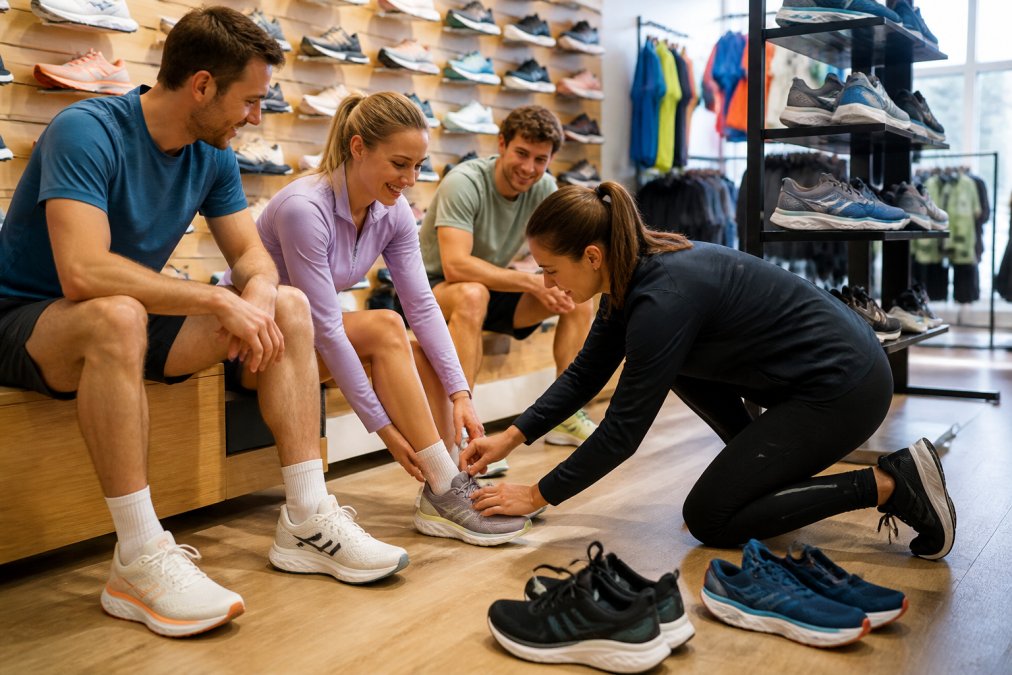
- Get fitted if you can. A gait analysis at a running shop takes minutes and prevents guesswork.
- Size up half a size. Feet swell during runs, so allow room in the toe box.
A common mistake is buying shoes that feel tight in the shop. Your feet expand during a run, so a shoe that feels snug standing still will rub and cause blisters after a few kilometres.
Neutral vs Stability: Which Do You Need?
Neutral shoes suit most beginners. They offer cushioning without extra support structures, and they work well if your feet roll inward only slightly or not at all. Stability shoes add a firmer medial post or guidance system to control overpronation, where your foot rolls inward too much.
If you are unsure, start neutral. Many new runners assume they overpronate when they do not. A gait analysis removes the doubt. Stability models like the ASICS Gel-Kayano 32 or New Balance Fresh Foam X 860v15 cost more and weigh more, so only choose them if you genuinely need the support.
The NHS guidance on choosing running shoes recommends replacing shoes once the midsole loses its cushioning, which for most runners happens after roughly 500 to 800 kilometres.
1. Brooks Ghost 18: The Reliable All-Rounder
The Brooks Ghost 18 is the safest first pair for most new runners. It is a neutral daily trainer with balanced cushioning, an engineered mesh upper for breathability, and durable outsole rubber built for high-mileage training.
What most guides miss is how forgiving the Ghost is across different paces. You can jog slowly or pick up the tempo, and it copes with both. The ride is smooth rather than springy. Some runners find it slightly firm next to max-cushion alternatives, but that firmness gives it a stable, grounded feel.
Pros:
- Excellent reputation for reliability
- Versatile across various running paces
Cons:
- Feels firmer than plush alternatives
For a shoe you can wear three or four times a week without thinking about it, it offers excellent value.
2. ASICS Novablast 6: Bouncy Cushioning for New Runners
If you want a shoe that feels lively underfoot, the ASICS Novablast 6 delivers. Its FF BLAST PLUS cushioning absorbs impact, and a trampoline-inspired outsole design returns energy with each stride.
The gusseted tongue wing fit system keeps the midfoot secure, which matters on longer sessions. It is also lightweight for the amount of cushioning on offer. The trade-off is stability: the high stack height can feel wobbly on uneven ground, so stick to roads and pavements.
Pros:
- High comfort for longer sessions
- Lightweight construction
Cons:
- Stack height may feel unstable on uneven surfaces
It suits runners who prefer a softer, more responsive feel. If your routes are mostly flat tarmac, this is a strong pick.
3. New Balance 1080 v15: Plush Comfort for Joint Protection
New runners with sensitive joints should look closely at the New Balance 1080 v15. The Fresh Foam X midsole gives signature softness, while a rocker profile rolls you smoothly from heel to toe.
The engineered knit upper is breathable and accommodating, so it fits a range of foot shapes without pressure points. This is the most cushioned shoe on the list. The softness also means less ground feel, which some runners dislike.
Pros:
- Exceptional comfort for daily wear
- Accommodating fit for various foot shapes
Cons:
- Higher price point than entry-level models
If protecting your knees and hips matters more than saving money, the 1080 v15 earns its cost.
4. Nike Pegasus 42: Durable and Versatile
The Nike Pegasus 42 has been a neutral trainer for decades, and it still works for beginners who want one shoe for everything. A responsive foam midsole and Zoom Air unit add spring, while engineered mesh provides targeted support.
Durability is its standout quality. The outsole and upper hold up to consistent training, and because it is widely available, you can often find it discounted. The main drawback is fit: the midfoot can feel narrow for some runners, so try before you buy.
Pros:
- Highly durable construction
- Widely available and frequently discounted
Cons:
- Can feel narrow in the midfoot
It is one of the better-value options for a shoe that handles both short and long runs.
5. Kiprun Kipride Max: Best Value for Beginners
Budget-conscious beginners should start with the Kiprun Kipride Max. It offers high-density foam for long-lasting comfort, a wide base for stability, and a padded collar for heel security.
The wide platform is a real advantage for new runners who are still building balance and strength.
Pros:
- Excellent value for the technology provided
- Stable platform for new runners
Cons:
- Less brand prestige than premium competitors
For your first pair, fit and comfort matter more than brand name or price. A well-fitting budget shoe beats an ill-fitting premium one every time.
6. Salomon Aero Glide 4: Lightweight Maximalist Ride
Runners who want cushioning without weight should try the Salomon Aero Glide 4. Energy Foam keeps it light, rocker geometry speeds up transitions, and a breathable 3D mesh upper keeps feet cool.
Pros:
- Very smooth ride quality
- Lightweight feel on the foot
Cons:
- Outsole grip is best suited for road surfaces
Frequently Asked Questions
How do I know if a running shoe fits correctly?
A well-fitting running shoe should feel snug around the heel and midfoot but leave about a thumb’s width of space between your longest toe and the front of the shoe. Your toes should be able to wiggle freely. Try shoes on later in the day when your feet are slightly swollen, and wear the socks you plan to run in. Walk or jog around the shop to check for rubbing or pressure points. The best running shoes for beginners should feel comfortable immediately, not require a break-in period.
Do beginners need expensive running shoes?
Not necessarily. While premium models like the New Balance 1080 v15 or ASICS Gel-Kayano 32 offer advanced cushioning and support, there are excellent budget-friendly options such as the Kiprun Kipride Max. The key is finding a shoe that matches your foot type and running goals. Many beginners start with a mid-range neutral trainer and upgrade later as their mileage increases. Focus on fit and comfort rather than price alone.
How often should a beginner replace their running shoes?
Most running shoes last between 300 and 500 miles (roughly 480 to 800 kilometres). For a beginner running 10 to 15 miles per week, that means replacing shoes every 6 to 9 months. Signs it’s time for a new pair include worn-out tread, compressed midsole foam, and new aches in your knees, hips, or shins. If you’re training for a marathon, check your shoes at the start of your training block and replace them before the race if needed.
What is the difference between neutral and stability running shoes?
Neutral running shoes like the Brooks Ghost 18 or ASICS Novablast 6 are designed for runners with a standard gait who don’t need extra arch support. Stability shoes such as the ASICS Gel-Kayano 32 or New Balance Fresh Foam X 860v15 include features like medial posts or guidance systems to reduce overpronation, where your foot rolls inward excessively. If you’re unsure which type you need, visit a specialist running shop for a gait analysis. Many beginners with flat feet benefit from stability shoes.
Should I buy running shoes a size bigger?
Many runners do size up by half a size to a full size in running shoes. Your feet swell during exercise, and a larger size prevents your toes from jamming against the front of the shoe, which can cause blisters and black toenails. Aim for about a thumb’s width of space at the front. However, fit varies by brand, so always try shoes on and walk around in them. The best running shoes for beginners are ones that feel comfortable from the first step.
The hardest part of running is not choosing shoes. It is keeping going once the initial excitement fades. The Running Bug turns that grind into something to look forward to, with flexible challenges you can fit around work, family, and everything else. Create an account and you get 15% off your first race, plus a medal for every result you submit. Get started with The Running Bug and give your training the reward it deserves.