

Table of Contents
- What Causes a Stitch When You Run?
- How to Get Rid of a Stitch While Running
- How to Prevent a Stitch When Running
- Eating Before Running and Side Stitches
- Breathing Techniques for Running That Reduce Stitches
- When a Stitch Is More Than a Stitch
- Conclusion
- Frequently Asked Questions
Last Updated: 21 October 2026
What Causes a Stitch When You Run?
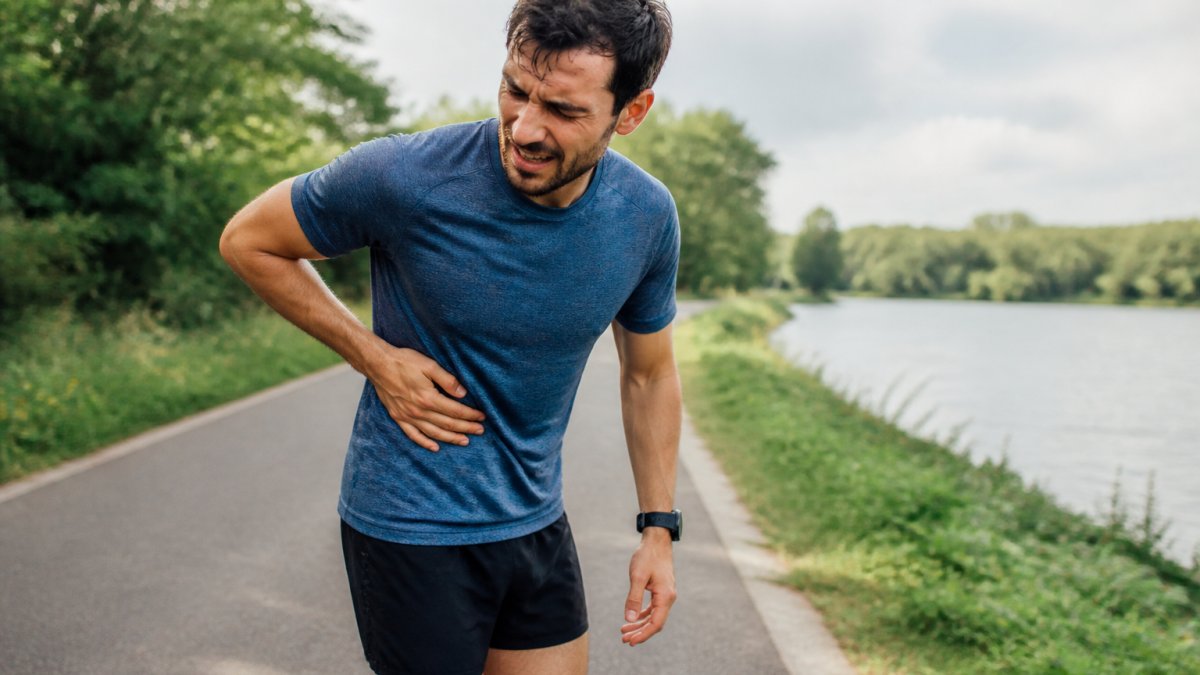
A stitch is a sharp cramp under the ribs, usually on your right side, that strikes mid-run and can double you over. At The Running Bug, we hear about it from new runners constantly. The good news: what causes a stitch is well understood, and it is rarely anything serious.
It comes down to your diaphragm, the sheet of muscle under your lungs. When you run, that muscle works harder. Some researchers link stitches to reduced blood flow to the diaphragm, while others point to strain on the ligaments that hold your organs in place. Both ideas explain the same thing: the pain arrives when your body is pushed slightly past what it is used to.
There are three main triggers:
- Breathing shallow and fast instead of steady and deep
- A full stomach bouncing against your diaphragm
- Dehydration pulling blood away from working muscles
The fix is usually simple. Slow your breathing, ease the pace, and press a hand into the sore spot. Below, we break down each trigger and the habits that keep stitches away.
The Diaphragm and Ligament Theory
Two explanations dominate the research, and they likely work together. The first is that the diaphragm cramps when it is starved of blood flow during hard effort. The second involves the ligaments that anchor your liver and stomach, which get stretched as your torso bounces with each stride.
In practice, this means stitches are more common when you run fast, run soon after eating, or run when you are tired. A gentle jog rarely triggers one. A hard push up a hill often does.
If you feel a stitch coming on, notice your footfall. Many runners find the pain is worse on the side that hits the ground hardest. Evening out your stride can ease it.
Why Full Stomachs and Dehydration Contribute
A full stomach is the most common trigger we see. When you eat and run soon after, food sits in the stomach and pulls on the ligaments that support it. Every step adds to the tug.
Dehydration works differently. When you are low on fluid, your body sends more blood to your working legs and less to your diaphragm. A tired, under-supplied diaphragm is a cramping diaphragm.
So the two rules are straightforward:
- Leave enough time between meals and runs
- Drink steadily through the day, not just before you head out
How to Get Rid of a Stitch While Running
The fastest way to get rid of a stitch while running is to slow down and change your breathing. Stop pushing, drop to a walk if you need to, and breathe deeply from your belly. Most stitches ease within a minute or two.

Here is the sequence we recommend:
- Ease your pace to a slow jog or a walk
- Press two fingers into the sore spot and hold
- Breathe in deeply through your nose, out slowly through your mouth
- Lean forward slightly to stretch the diaphragm
- Stretch the sore side upward if the pain lingers
If the stitch clears, start again gently. If it returns straight away, call it a day for hard running. A short walk home beats a painful push.
How to Prevent a Stitch When Running
Prevention comes down to timing, breathing, and building up gradually. You cannot guarantee you will never get a stitch, but you can make them far less likely.
The habits that help most:
- Warm up with a five-minute walk or easy jog before you pick up the pace
- Build your distance slowly rather than jumping ahead
- Train your core with simple exercises like planks and bird-dogs
- Stay hydrated through the day, not in one big gulp before you run
- Avoid heavy meals in the two hours before a run
A common mistake is going out too fast. New runners often start at a pace they cannot hold, and the body protests. Start slower than feels natural. You can always speed up later in the run.
Eating Before Running and Side Stitches
Eating too close to a run is one of the biggest causes of side stitches. The stomach is still working, the ligaments are under load, and every stride jostles both.
How long should you wait after eating? A light snack needs around 60 to 90 minutes. A full meal needs two to three hours. Everyone is different, so use those as starting points and adjust.
Good pre-run snacks that sit lightly:
- A banana
- A slice of toast with a little honey
- A small bowl of porridge
- A handful of plain crackers
Avoid heavy, fatty or very fibrous meals before a run. Save those for afterwards.
Skipping food entirely before a long run is not the answer. Running on empty can cause dizziness and low energy. Choose a light snack instead of nothing at all.
Breathing Techniques for Running That Reduce Stitches
Steady, deep breathing is your best defence. Shallow chest breathing tires the diaphragm quickly. Belly breathing keeps it supplied and relaxed.
Try this rhythm: breathe in for three steps, breathe out for two. This pattern gives your diaphragm a longer exhale and helps it settle into a rhythm.
A few habits to build:
- Breathe from your belly, not your upper chest
- Keep your shoulders relaxed and low
- Match your breathing to your pace, not the other way round
- Practise the three-two rhythm on easy runs so it feels natural on hard ones
If you are new to breathing work, start with a few minutes on a gentle run. It will feel odd at first. Give it a couple of weeks and it becomes automatic.
When a Stitch Is More Than a Stitch
Most stitches are harmless and pass within minutes. But some side pain needs a doctor’s eye, and it is worth knowing the difference.
See a medical professional if the pain:
- Does not ease after you stop and rest
- Comes with shortness of breath, sweating or nausea
- Spreads to your chest, arm or jaw
- Appears alongside fever or vomiting
- Keeps returning in the same spot run after run
Chest pain during exercise should always be checked. It is far better to be told it is nothing than to ignore something that matters. If you have any doubt, stop and seek advice.
Conclusion
Stitches are a normal part of running, especially when you are building up. They are not a sign you are doing something wrong. They are a sign your body is adjusting.
The formula is simple: eat earlier, drink steadily, breathe from your belly, and build up gradually. Get those right and stitches become rare rather than routine.
At The Running Bug, we help runners stay motivated through flexible virtual challenges, from 5k to marathon distance. You run where and when suits you, submit your result, and earn a medal for your effort. New members get 15% off their first race, and every challenge supports a good cause. Get started with The Running Bug and turn your next run into something worth celebrating.
Frequently Asked Questions
Why do I get a stitch in my side when I run?
A stitch usually comes from your diaphragm and the ligaments that hold it in place being pulled as you breathe hard and bounce. Shallow chest breathing, a full stomach, dehydration and starting too fast all make it more likely. It is not a sign you are unfit, and most runners get them at some point, especially when pushing pace or running soon after eating.
Should I stop running if I get a stitch?
Not always. Slow to a walk or a gentle jog and press two fingers just below the painful spot while breathing out fully. Many stitches ease within a minute or two. If the pain sharpens, moves to your chest, or does not settle after ten minutes of rest, stop and seek medical advice, particularly if you also feel dizzy or short of breath.
Does eating before a run cause a stitch?
It can. A large meal or a high-fat, high-fibre snack too close to your run leaves the stomach full and pulls blood flow away from the diaphragm. Leave two to three hours after a main meal, or choose a small, low-fibre snack such as a banana about 60 to 90 minutes before you head out. Trial different timings on easy runs to find what suits you.
Can poor breathing cause a stitch?
Yes. Shallow chest breathing tires the diaphragm and makes the pull on its supporting ligaments stronger. Try breathing from your belly, and match your breath to your steps, for example inhaling for two foot strikes and exhaling for two or three. This rhythm keeps your diaphragm moving steadily and reduces the sudden jolts that bring on a stitch.